
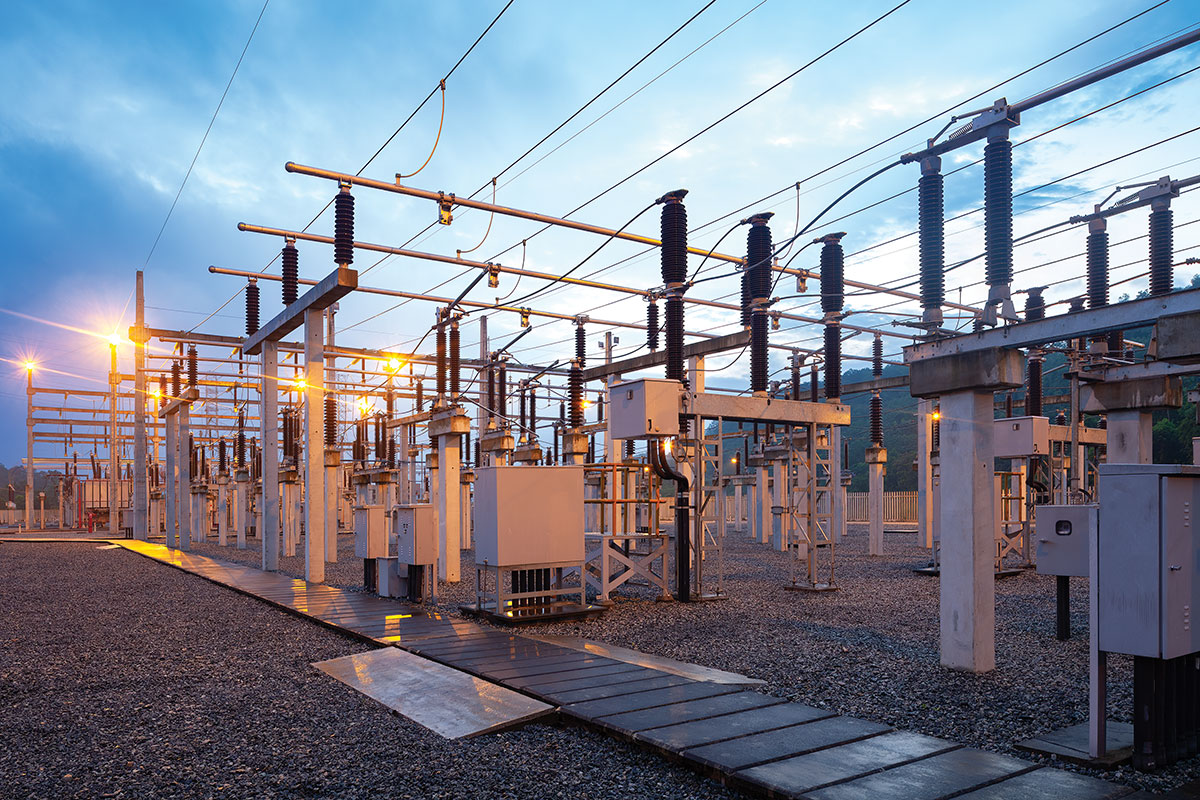

Requirements for medium-voltage installations —those over 1000 volts ac and 1500 volts dc —are no strangers to the National Electrical Code® (NEC®). For many years, the installation requirements for medium-voltage applications were intermixed throughout the NEC with the rules for installations of less than 1000 volts ac or 1500 volts dc. Beginning with the 2020 edition of the NEC through the most current edition of the NEC (2026), the NEC Correlating Committee has directed the individual Code Making Panels (CMPs) to take a close look at these requirements in the articles that fell within their purview and identify changes that could be made to help improve clarity and usability of the NEC. There have been a significant number of changes around medium-voltage installation requirements over the past few cycles of the NEC that clearly separate them from installations at lower rated voltages, all while looking to align with proposed changes to the overall structure of the NEC in the 2029 edition.
Significant 2020 NEC Changes
The 2020 cycle of the NEC served as the infancy stage in starting to make changes around medium-voltage requirements, with more to come in future additions. One significant change that was made in the 2020 NEC was the addition of new Article 311 to address the use, installation, construction specifications, and ampacities for Type MV medium-voltage conductors and cable. Much of the content for Article 311 was extracted from Articles 310 and 328. As a result of these changes, Article 328 was removed in its entirety from the 2020 NEC.
Part II of Article 311 placed a specific focus on the construction and application of Type MV cables. Requirements around the thickness of insulation and jacket for both shielded and nonshielded conductors were addressed and intended to align with the information provided in the associated respective tables. Table 311.12(A) was also added to address the minimum size of conductors. Again, while much of this information was extracted from other parts of the NEC, it was segmented from where it was combined with lower voltage wiring applications and highlighted as being specific to medium-voltage installations only.
Significant 2023 NEC Changes
While the 2020 NEC started the movement on separating out medium-voltage requirements into their own specific area with the addition of Article 311, the 2023 cycle of the NEC created a plethora of new articles related to these installations. Here is a list of those new medium voltage-based articles and what they specifically address:
- Article 235 General requirements for branch circuits, feeders, and services for systems over 1000 volts ac or 1500 volts dc
- Article 245 Overcurrent protection for systems over 1000 volts ac and 1500 volts dc
- Article 305 General requirements for wiring methods and materials for systems over 1000 volts ac and 1500 volts dc
- Article 315 Requirements for the use, installation, construction specifications, and ampacities for Type MV medium voltage conductors, cable, cable joints, and cable terminations, including voltages from 2001 volts to 35,000 volts ac and 2001 volts to 2500 volts dc.
- Article 495 General requirements for equipment operating at more than 1000 volts ac and 1500 volts dc
Article 235, unlike the other new articles listed in this section, was not initially added during the First Draft of the 2023 NEC. Instead, being added during the Second Draft, new Article 235 extracted medium-voltage information from relevant sections of Article 210 (Branch Circuits), Article 215 (Feeders), Article 225 (Outside Branch Circuits and Feeders), and Article 230 (Services).
Article 245 was developed based on moving the overcurrent protection requirements found in Part IX of Article 240 to this new article. Initially, CMP-9 also wanted to include overvoltage protection (surge arresters) as part of Article 245 but were directed by the NEC Correlating Committee to leave those requirements in Article 242.
Article 305 was derived by extracting the requirements from Part II of Article 300. As part of their substantiation for the change, the NEC Correlating Committee advised that creating a separate article for medium voltage requirements would provide the electrical industry, including electrical inspectors, more guidance. They also mentioned campus-wide distribution systems, microgrids, and alternative energy installations all as applications that could potentially utilize medium voltage requirements.
Article 315 takes Article 311 that was created as part of the 2020 NEC and moves it to this new location as well as adding requirements that are specific to joints and terminations that were not initially included as part of Article 311. Connection points, such as joints and terminations, of medium voltage cables are critical to functionality and adding additional requirements in the NEC around these areas aim to assist in reliable and safe installations.
Article 495 replaces former Article 490 from the 2020 NEC, which addresses general requirements for operating medium voltage equipment. As part of its development, Article 495 also pulled in the requirements in Article 400 for flexible cords and cables rated 2000 volts and greater. Parts from Part XI of Article 430 dealing with motor installations were also pulled into new Article 495. Part V in Article 495 was also included to address medium voltage boiler installations.
Significant 2026 NEC Changes
Additional changes to medium-voltage installations were addressed during the 2026 NEC development cycle. Article 315 saw expanded details added as it relates to construction and insulation specifications. Ampacity adjustments and new guidelines on insulation levels were also included that align with UL 1072-2023 and ANSI/ICEA standards. Section 310.3 was also added to address reconditioned equipment. At this time, 310.3(B) specifically lists items that are not permitted to be installed as reconditioned equipment, including Type MV cables and conductors, cable joints, cable terminations, connectors, and any fittings associated with the aforementioned components.
Additional changes to the 2026 NEC were the addition of Article 270 to address grounding and bonding of medium voltage systems and the division of the existing information in the now deleted Article 235 into four new standalone articles to address each area separately:
- Article 265 Branch Circuits Over 1000 Volts ac, 1500 Volts dc, Nominal
- Article 266 Feeders Over 1000 Volts ac, 1500 Volts dc, Nominal
- Article 267 Outside Branch Circuits and Feeders Over 1000 Volts ac, 1500 Volts dc, Nominal
- Article 268 Services Over 1000 Volts ac, 1500 Volts dc, Nominal
Potential 2029 NEC Changes
Although we don’t specifically know the changes that will take place around medium voltage requirements in the 2029 NEC until it fully makes its way through the NFPA Standards Development Process, the new Informative Annex L in the 2026 NEC gives us some insight into what those changes might look like. Table L.1 within Informative Annex L shows the proposed organization of the 2029 NEC, as developed by the NEC Correlating Committee, including the specific article numbers in the 2023 and 2026 NEC editions and where they could be moved to for the 2029 NEC. With the potential to expand the NEC to 30 chapters that further organize the code into specific areas that are intended to provide more clarity and usability, there are two chapters being proposed that specifically address medium voltage requirements, and the articles that would be included:
- Chapter 3 Wiring and Protection for Systems Over 1000 Vac, 1500 Vdc
o Article 300 General Requirements
o Article 305 Conductors and Cables
o Article 306 Use and Identification of Grounded Conductors
o Article 310 Branch Circuits
o Article 315 Feeders
o Article 325 Outside Branch Circuits and Feeders
o Article 330 Services
o Article 340 Overcurrent Protection
o Article 342 Overvoltage Protection
o Article 350 Grounding and Bonding
- Chapter 17 Equipment Over 1000 Vac, 1500 Vdc
o Article 1700 General
o Article 1702 Switchgear and Industrial Control Assemblies
o Article 1704 Mobile and Portable Equipment
o Article 1706 Boilers
o Article 1708 Motors, Motor Circuits, and Controllers
o Article 1710 Capacitors
o Article 1712 Resistors and Reactors
The “Public Input” stage of the standards development process is open now through April 9, 2026, so anyone interested can offer their comments as to the proposed structure for the 2029 NEC to have them considered by the committee. You can track the information as it relates to the development of the code and submit public inputs and comments, at the appropriate stages, by visiting www.nfpa.org/70next.
As the electrical industry continues to evolve, so too must the NEC. Changes made to medium-voltage requirements in the 2020, 2023, and 2026 editions of the NEC have been proactive in organizing these rules to add more clarity and usability for those who depend on the NEC in their daily work, such as designers, installers, and inspectors. Proposed changes to the 2029 NEC aim to take usability a step further by adding two dedicated chapters on medium-voltage requirements. These ongoing advancements ensure that the NEC remains a vital and adaptive resource for the electrical industry as it meets the challenges of modern infrastructure and technology.
Important Notice: Any opinion expressed in this column is the personal opinion of the author and does not necessarily represent the official position of NFPA or its Technical Committees. In addition, this piece is neither intended, nor should it be relied upon, to provide professional consultation or services.