
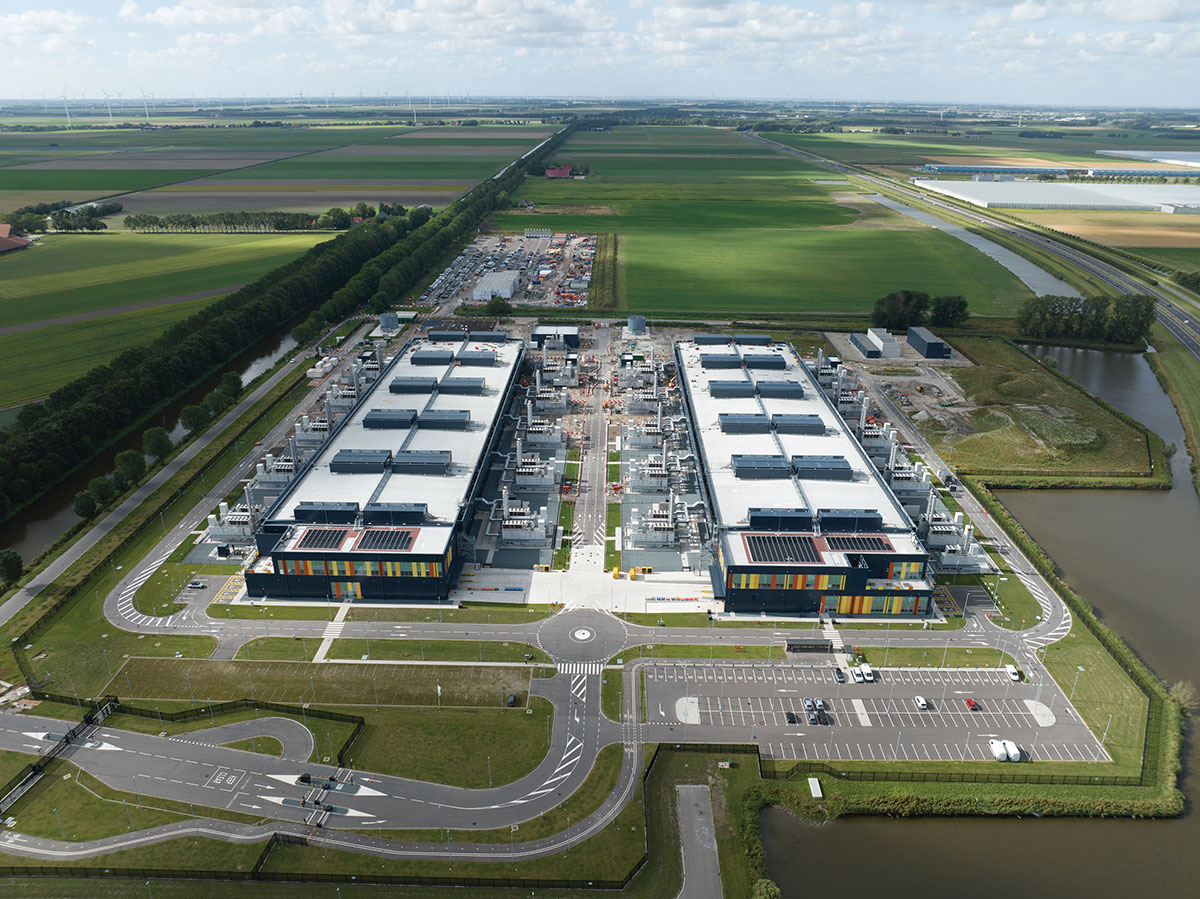

As data centers multiply to power the AI revolution, electrical inspectors find themselves on the front lines of ensuring these massive digital engines run safely and reliably.
by Christine Porter, Field Evaluations/Codes and Standards Trainer at Intertek
The digital world runs on data centers. Every online purchase, video stream, social media post, and artificial intelligence (AI) query relies on massive facilities filled with servers, switches, and storage equipment. In the United States alone, there are now more than 5,000 data centers, and that number continues to climb each year.
AI is proving to be the biggest market driver. Beyond the traditional cloud storage, bit coin mining, and enterprise data hubs, new centers are being built to handle the enormous processing power required to train and operate AI models. These facilities are designed to run around the clock, moving “chunky pieces of info” nonstop. Amazon Web Services, Microsoft Azure, and Google Cloud are hosting more data and video traffic than ever before. Platforms like TikTok and YouTube are consuming staggering amounts of bandwidth, further fueling the need for more space and more computing power.
For electrical inspectors, this rapid expansion creates both challenges and opportunities. Data centers are unlike most other buildings. They combine elements of industrial facilities, commercial office space, and specialized technology environments. Understanding what to look for when walking into a data center is critical to ensuring safety, reliability, and compliance with electrical codes.
What Inspectors Encounter in a Data Center
A typical data center includes thousands of servers connected through racks and aisles. These racks draw large amounts of power and often use multiple redundant feeds to prevent downtime. Inspectors may see a maze of branch circuits, busways, and power distribution units (PDUs) supplying energy to the servers.
Beyond the IT hardware, data centers also rely heavily on uninterruptible power supplies (UPS) and battery storage units. These systems provide backup power in case of an outage and must be carefully inspected for proper installation, ventilation, and labeling. Energy storage equipment, in particular, has been evolving rapidly, with lithium-ion batteries becoming more common in place of traditional lead-acid designs. Each type carries specific requirements for fire safety, spacing, and fault protection.
Mechanical and electrical infrastructure are also extensive. HVAC systems are scaled to handle massive heat loads from server racks, while lighting, grounding, and bonding must all meet National Electrical Code (NEC) requirements. Inspectors should also pay attention to emergency power systems, such as diesel generators, that can support the facility during extended outages.
The Strain on the Power Grid
Energy usage is one of the most pressing issues tied to data centers. These facilities are power-hungry by design, with many individual centers consuming as much electricity as a small city
Electrical inspectors are not responsible for utility grid planning, but they do play a role in verifying that the on-site distribution equipment can safely manage the enormous loads. This means confirming conductor sizing, overcurrent protection, and grounding are all installed in accordance with code. Any misstep could result in overheating, equipment failure, or safety hazards for workers and first responders.
Why Field Labeling and Evaluation Matter
Another area of focus for inspectors is field labeling and field evaluations. Data centers are often built at an aggressive pace to keep up with demand, which means equipment from multiple manufacturers and regions may be installed. Not all of it arrives with a certification mark or listing that meets U.S. standards.
That’s where field evaluations come in. Electrical inspectors must ensure that every piece of equipment, whether it’s a power distribution panel, UPS, or specialized ICT rack, has been properly evaluated for compliance with applicable safety standards. Beside the traditional “stick building” approach, modular data centers (MDC) are also utilized as a way to incorporate smaller data centers or provide additional capacity when a structure is fully utilized. These MDCs must be evaluated to UL 2755. A field label signifies that a qualified third party has inspected the equipment and confirmed it meets safety requirements.
Without these evaluations, inspectors risk approving installations that could compromise both personnel safety and system reliability. In a facility designed to run nonstop with no tolerance for failure, overlooking field labeling is not an option.
The Expanding Role of Inspectors
As data centers continue to multiply and evolve, electrical inspectors find themselves on the front lines of an industry shaping the future of information technology. Their responsibilities extend beyond checking code compliance, they are helping ensure the stability of the digital infrastructure that society increasingly depends upon.
Inspectors walking into a new data center are not just looking at wiring methods or conduit bends. They are evaluating the backbone of global commerce, entertainment, education, and communication. Their careful attention to equipment, energy systems, and safety labeling helps guarantee that the lights stay on, and that the servers stay online.
In a world where data is as essential as electricity itself, the role of the electrical inspector has never been more important.