
Warning! The following read may bore NEC geeks; it is intended to provide a foundation for those who are still novices to the industry.
In general, Article 240 provides guidance on protecting conductors, and not equipment. Equipment protection guidance will be located within specific Articles outside of Article 240; see Section 240.3. Let’s begin with the five circuit conditions.
The normal circuit – what makes a circuit normal? As an apprenticeship instructor, I often refer to students as electron wranglers. The primary job of an electrician is to provide a safe path/circuit for electrons to travel, much like a pilot safely delivers passengers to their destination. The largest part of the day-to-day for an electrician is furnishing a safe, reliable, and low impedance path for electrons. A normal circuit is where electrons stay within the path furnished by the electrician. In addition, the current flowing is less than the ampere rating of the branch or feeder circuit. See Section 210.18 of the 2023 NEC for branch circuit ratings.
The open circuit. The open circuit is where there is a break within the path furnished by the electrician. Open circuits can be intentional, such as opening a circuit with a photocell, motor starter, lighting contactor, or a snap switch, to name a few examples. Open circuits can also happen unintentionally, such as a poor wiring connection. For example, a “loose wire nut.”
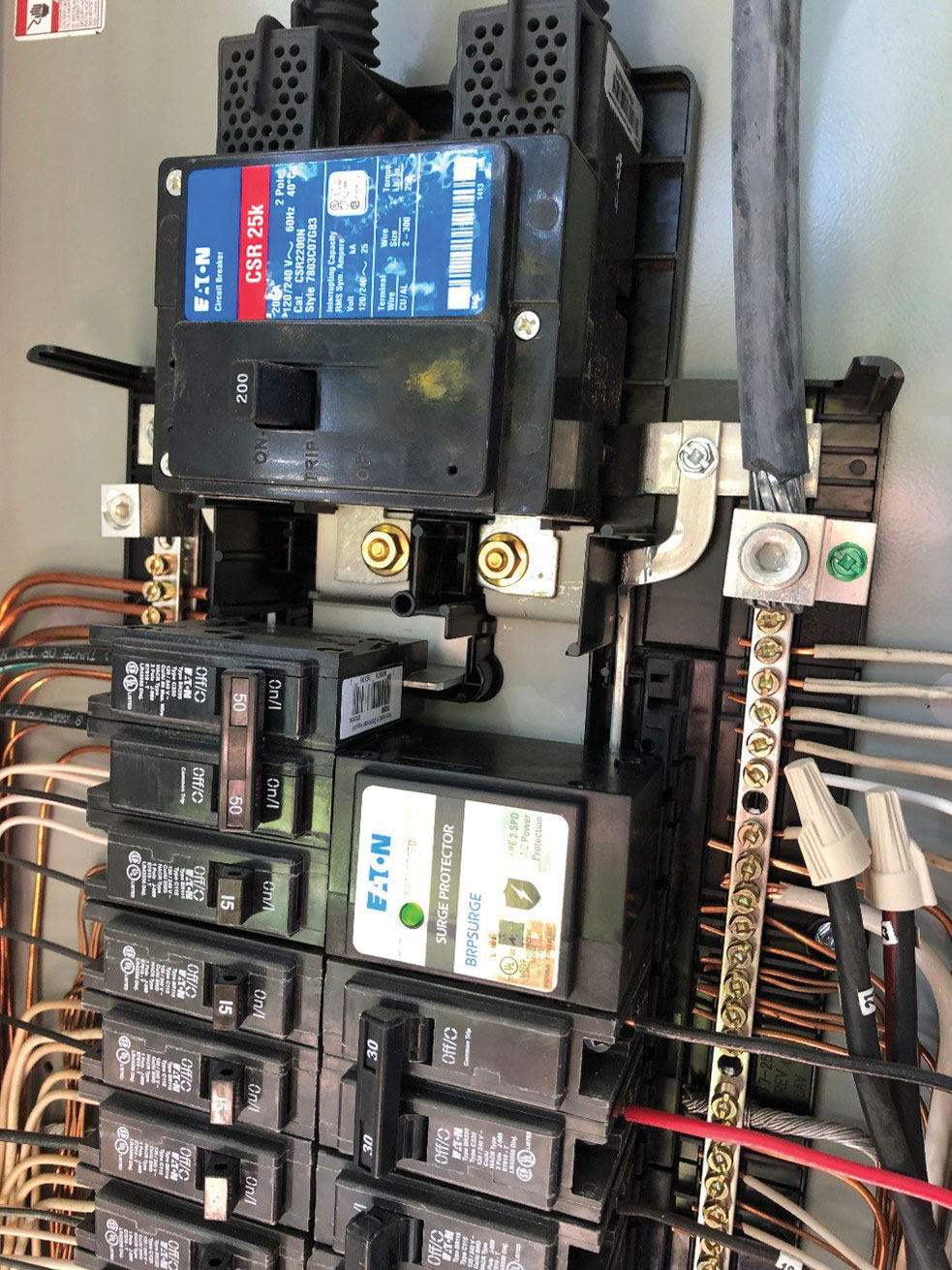
The overloaded circuit. In an overloaded circuit, electrons stay within the intended path. Unfortunately, they have invited a few too many of their friends to join along the journey, resulting in a current value that exceeds the rating of the circuit. Remember, the rating of a branch circuit is based on the ampere rating of the branch circuit’s overcurrent protective device. See Section 210.18 of the 2023 NEC for greater detail. An example of an overloaded circuit would be 18 amperes of current measured on a 15-ampere branch circuit. [See Figure 1.]

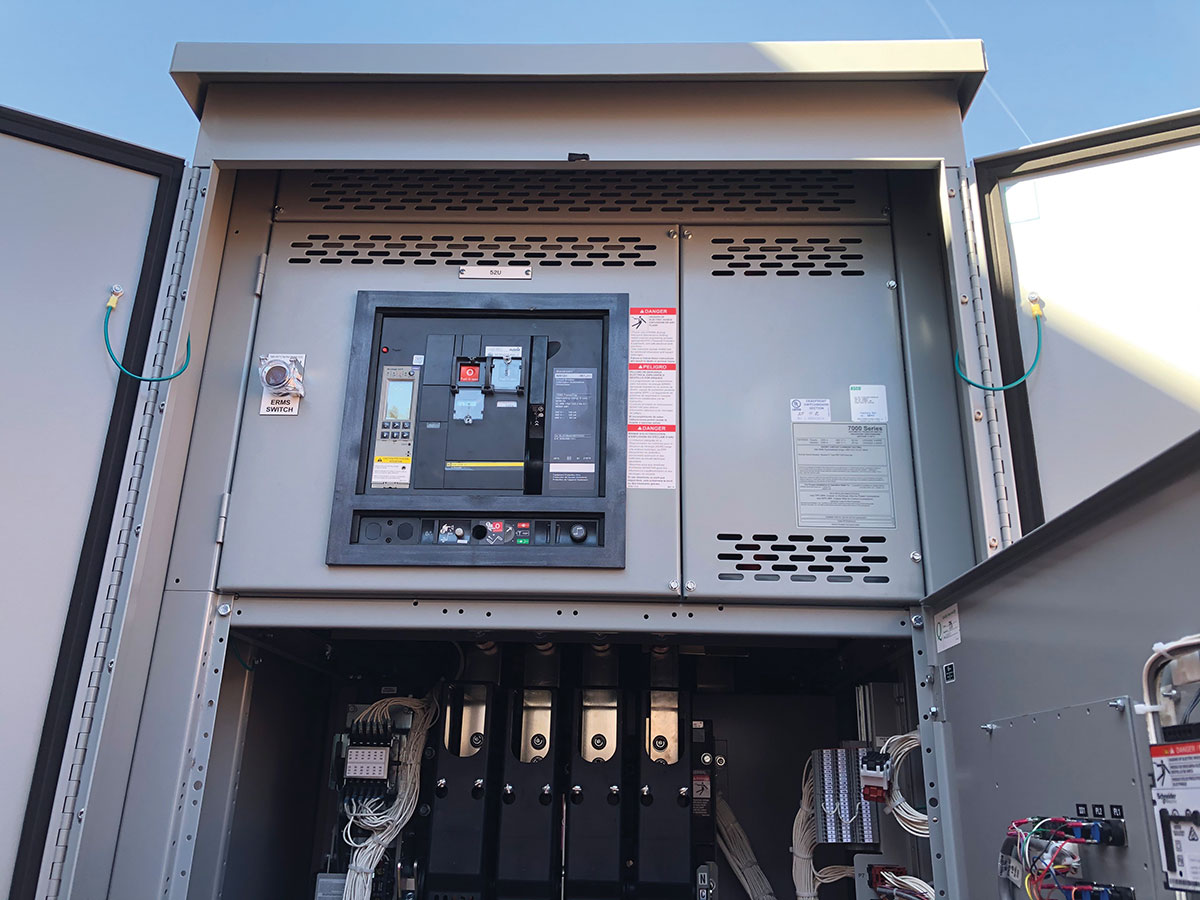
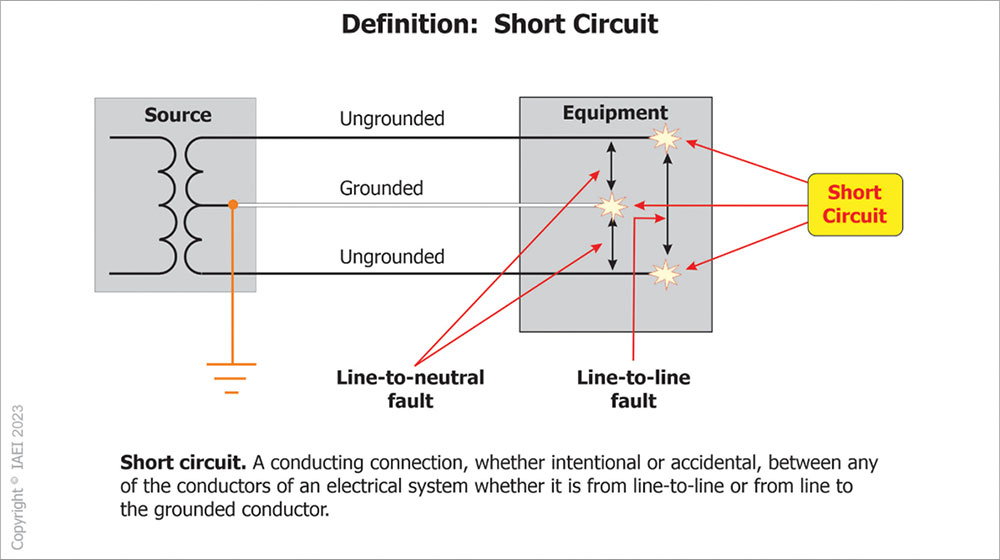
The short circuit. Short circuits became a defined term in the 2023 NEC thanks to the efforts of CMP 10. I would personally tell CMP 10, “it’s about time!” As the name insinuates, a short circuit is, well, short. Electrons have found a short cut to the finish line, resulting in a circuit path outside of the intended. An example would be dropping a conductive tool between bus bars in a panelboard. Short circuits have relatively low impedance, and as result can deliver high amounts of current through the shorted circuit path. [See Figure 2.]
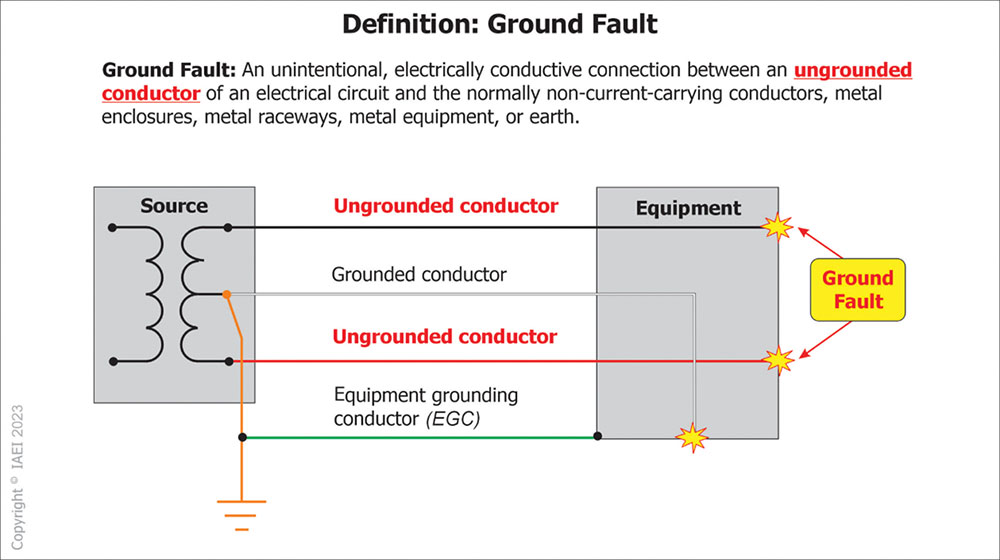
Lastly, the ground fault. Ground faults are the result of a connection between ungrounded conductors and normally non-current-carrying conductive materials, or the earth itself. An example would be a pinched phase conductor between a four-square blank and the grounded four-square box. A ground fault is commonly mistaken for a short circuit. When reviewing the NEC definition for a ground fault, it is clear that the path/circuit for ground fault current must contain portions that were never intended to carry current. An unintentional connection between a system grounded conductor and ungrounded conductor is not a ground fault but rather a short circuit, as the grounded conductor is a system or circuit conductor designed to carry current. [See Figure 3.]
Overcurrents
Out of the five circuit conditions, how many are overcurrents? Let’s review the NEC definition for overcurrent. The NEC defines an overcurrent as “any current in excess of the rated current of equipment or the ampacity of a conductor. It may result from overload, short circuit, or ground fault.” Answer: Three of the five circuit conditions are overcurrents. Why would a student of the NEC need to know this? Overcurrent protective devices, or OCPDs, such as circuit breakers & fuses, most often provide the full range of overcurrent protection, i.e., short circuits, ground faults, and overloads.
What is this dude talking about? Don’t OCPDs always provide protection over the full range of overcurrents?
Let’s look at the NEC required placement of OCPD’s, specifically Section 240.21. Section 240.21 is prescriptive and states the placement of an OCPD “shall be provided in each ungrounded circuit conductor and shall be located at the point where the conductors receive their supply.” By placing the OCPD where conductors receive their supply, all the circuit current on the load end of the OCPD will be forced to travel through the device. The placement does not necessarily mean the device will provide the full range of overcurrent protection.
A Closer Look
Let’s begin by looking at service conductors. Service conductors must be provided with overload protection in accordance with Section 230.90 of the 2023 NEC. In general, a service conductor is not supplied through an OCPD when brought to the service equipment. The overload protective device for the service conductors would not provide any short circuit or ground fault protection should a short circuit or ground fault occur on the line side of the overcurrent protective device. In a sense, OCPDs are blind to any short circuit or ground fault current on the line side of the device. This is because none of these currents would travel through the device, as shown in Figure 4.
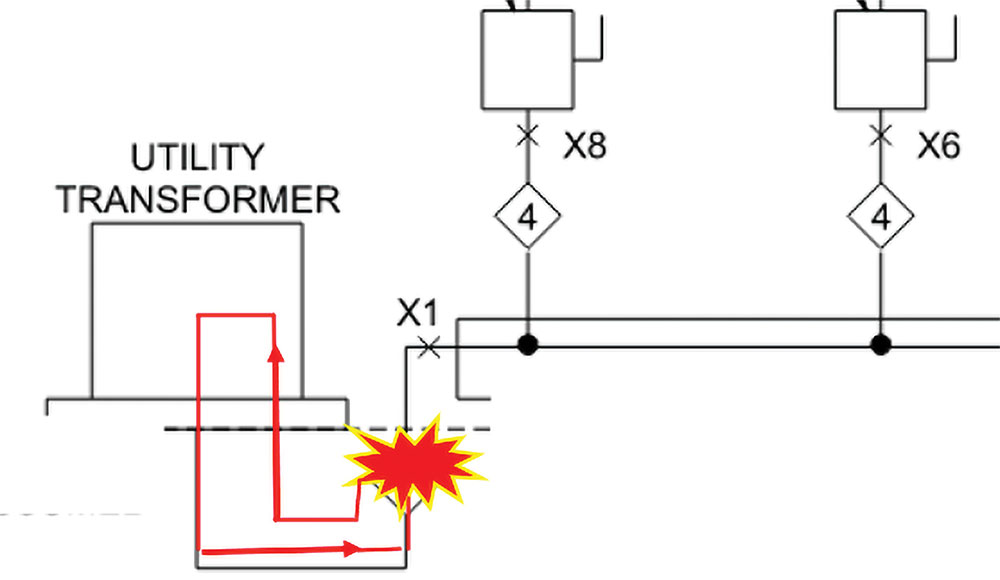
For this very reason, 2023 NEC Section 230.70(A)(1) requires service conductors to terminate to an OCPD nearest the point they enter a building, or comply with Section 230.6 of the 2023 NEC, to be considered outside the building. Service conductors must be provided with a greater degree of protection, as they are considered to be void of short circuit and ground fault protection.
IN Summary
The placement of an OCPD plays an instrumental role in providing the full range of overcurrent protection. In general, 2023 NEC Section 240.21 provides prescriptive requirements to assure conductors are protected over the full range of overcurrents. In part II of this series, we will further examine unique considerations where conductors receive the full range of overcurrent protection from not one, but two OCPDs—specifically, feeder taps and the surrounding rules found in 2023 NEC Section 240.21(B).