
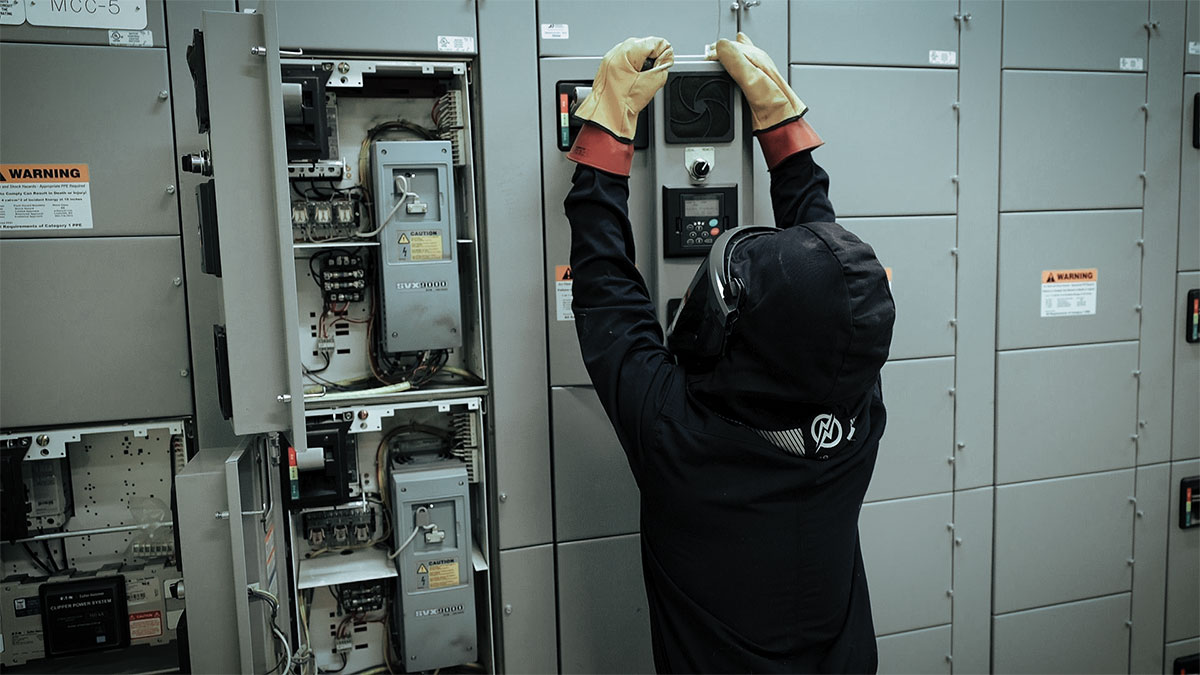

Electrical safety begins with knowledge, preparation, and consistent maintenance practices. As electrical systems become more complex and facilities continue to depend on them for critical operations, the importance of preventive maintenance outlined in NFPA 70B, Standard for Electrical Equipment Maintenance, continues to grow. This standard provides a clear framework for maintaining safe and reliable electrical equipment, but it is the trained professionals who bring those standards to life in the field.
Overview of NFPA 70B
Adopted as a mandatory standard in 2023, NFPA 70B outlines the framework for developing and maintaining an Electrical Maintenance Program (EMP) that supports safe and reliable system performance. The standard’s framework is presented in its early chapters, which outline program documentation, personnel safety, testing methods, and maintenance intervals, followed by detailed, equipment-specific procedures in Chapters 11 through 38.
NFPA 70B also describes how to apply these requirements in practice, recognizing maintenance strategies such as predetermined schedules, condition-based maintenance informed by real-time monitoring, and predictive maintenance that uses diagnostics such as infrared thermography or ultrasonic testing to detect issues before failure. For example, infrared imaging can identify loose or overheated connections that, if left unchecked, could lead to equipment damage or downtime.
The standard further includes detailed testing and verification procedures—such as insulation-resistance testing, contact-resistance measurement, thermographic scanning for hot spots, and calibration of protective devices like circuit breakers and relays. Test results and corrective actions must be documented and retained within the facility’s EMP.
Equally central to NFPA 70B is its focus on personnel safety. Chapter 5 establishes the foundational safety practices that support all maintenance activities, including risk assessments, lockout/tagout procedures, and use of appropriate personal protective equipment (PPE). It reinforces that all maintenance must be performed by qualified individuals trained to recognize electrical hazards and respond safely. These requirements align directly with NFPA 70E, which provides the companion standards for electrical safety in the workplace.
Implementing an Electrical Maintenance Program (EMP)
NFPA 70B centers on one overarching goal: establishing a documented Electrical Maintenance Program (EMP) that keeps electrical systems safe, reliable, and consistent. The standard emphasizes that every facility—regardless of size, industry, or system complexity—benefits from a structured approach to preventive maintenance.
While each program will look different, the most effective EMPs share several core characteristics. They begin with clear ownership, typically through a designated coordinator or qualified electrical contractor who understands how NFPA 70, 70B, and 70E intersect to guide both safety and maintenance practices. This individual plays a central role in coordinating inspections, ensuring compliance, and aligning procedures with facility operations.
A comprehensive initial assessment provides the foundation for the program. This includes evaluating the condition and criticality of each asset, reviewing documentation such as one-line diagrams, and verifying that maintenance histories are complete and up to date. These insights enable teams to set informed maintenance intervals and identify high-priority equipment that could pose the greatest operational or safety risk.
From there, successful EMPs prioritize documentation, measurement, and continuous improvement. Tracking test results, corrective actions, and equipment performance data over time reveals patterns that support smarter, more efficient maintenance decisions. This proactive analysis allows facilities to shift from reactive service calls to predictive maintenance—reducing downtime, preventing costly failures, and improving overall system reliability.
At its core, developing an EMP establishes a framework for accountability and preparedness. It ensures that maintenance decisions are grounded in data, guided by safety, and shared among all stakeholders. When facilities approach NFPA 70B as a living framework for continuous improvement rather than a compliance checklist, the result is a program that protects workers, safeguards operations, and extends equipment life.
Developing Skilled Professionals
Beyond the technical framework of NFPA 70B, skilled professionals bring the standard to life. Apprenticeships, such as those through IBEW Local 134, combine roughly 8,500 hours of classroom instruction and field experience to prepare electricians for the demands of electrical maintenance. Through this training, electricians develop the skills needed to test, document, and maintain equipment in full compliance with NFPA 70B requirements.
Safety remains a core part of every stage of training, from arc-flash prevention and lockout/tagout procedures to the proper use of personal protective equipment. This foundation ensures that maintenance is performed not only correctly but also safely.
Ongoing education builds on that foundation, helping electricians and contractors stay aligned with new technologies, updated codes, and evolving materials. By prioritizing continuous learning, the electrical workforce ensures that NFPA 70B’s principles of preventive maintenance and safety are sustained in every project.
Applying NFPA 70B in the Field
Preventive maintenance guided by NFPA 70B helped the Algonquin Wastewater Treatment Facility avoid unexpected outages and costly repairs. Jamerson & Bauwens Electrical Contractors. used infrared and ultrasonic testing to identify early warning signs of potential electrical faults, address them promptly, and maintain uninterrupted facility operations. This proactive approach demonstrates how proper maintenance safeguards both workers and essential infrastructure.
By applying NFPA 70B’s testing and documentation requirements, facilities also gain measurable benefits—lower unplanned downtime, extended equipment lifespan, and improved compliance during safety audits. Predictive data collected over time can be used to prioritize investments, verify maintenance effectiveness, and plan system upgrades before failures occur. These insights make preventive maintenance not just a safety measure, but a long-term operational strategy.
Effective implementation also depends on collaboration between contractors, inspectors, and facility managers. Contractors conduct the technical work and maintain documentation, while inspectors review records and testing data to verify compliance. That shared accountability ensures electrical systems remain dependable, safe, and compliant long after installation.
The Value of Ongoing Training
Today’s electrical systems incorporate advanced controls, renewable energy sources, and smart monitoring technologies. As these systems evolve, so must the professionals responsible for maintaining them. Keeping current requires consistent education and engagement with industry updates to ensure maintenance practices remain safe, accurate, and compliant.
Inspectors and electrical contractors can stay up to date through continuing-education programs, code workshops, and manufacturer training focused on new equipment and testing procedures. In Chicago, these opportunities are reinforced by the ongoing training efforts of IBEW Local 134 members and Electrical Contractors’ Association (ECA) contractors, who emphasize technical proficiency as technologies and safety standards advance. Staying informed about revisions to NFPA 70B, the National Electrical Code (NEC), and related standards helps ensure maintenance activities align with current requirements and best practices.
Ongoing training ensures that maintenance personnel are prepared to evaluate emerging technologies, interpret testing data correctly, and perform work that aligns with current safety requirements. Continuous learning is a core part of professional practice, essential to protecting workers, equipment, and the facilities they maintain.
Just as importantly, documentation and communication are key parts of professional practice. When electricians properly record testing results, note corrective actions, and share findings with facility teams, they close the loop between fieldwork and system oversight. This process not only supports regulatory compliance but also builds institutional knowledge, which helps prevent recurring issues and ensures safer, more efficient operations over time.
A Shared Responsibility
NFPA 70B establishes the framework for safe electrical maintenance, but its success depends on the skill and dedication of the professionals who bring it to life. Through their training, precision, and commitment to preventive maintenance, qualified electricians and contractors ensure that electrical systems remain safe, reliable, and ready to meet the demands of the future.
For additional resources, insights, and guidance on maintaining electrical safety and reliability, visit Powering Chicago’s website.
References:
- NFPA 70B, Standard for Electrical Equipment Maintenance (2023 edition), National Fire Protection Association
- NFPA 70E, Standard for Electrical Safety in the Workplace (2024 edition), National Fire Protection Association
- National Electrical Code (NFPA 70, 2023 edition)
- IBEW Local 134 Apprenticeship Program, Electrical Joint Apprenticeship and Training Trust of Chicago and Cook County
- Jamerson & Bauwens Electrical Contractors, Algonquin Wastewater Treatment Facility project
