
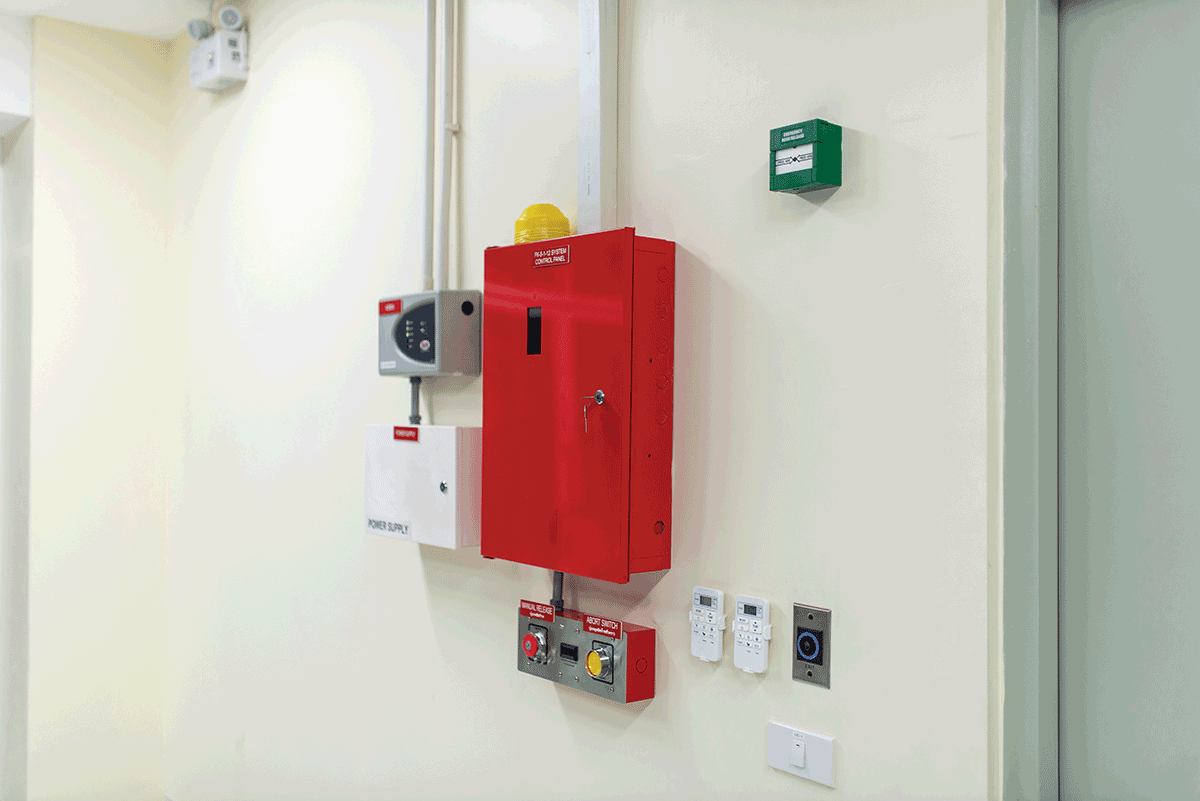

The subject of this article is the result of numerous questions from electrical designers and electrical contractors. Although some municipal electrical safety regulators have been trained on this subject and are involved in the enforcement of the building code requirements for electrically connected life safety systems, many electrical inspectors also appear to be unclear on the extent of their required enforcement of installations related to this subject.
Although I wrote on this subject in various articles, additional clarification is warranted. Electrical consultants, electrical installers, and electrical inspectors are mandated to use legally adopted Canadian Electrical Code, Part I (CE Code) and safety standards for electrical equipment listed in Appendix A of the CE Code.
Electrical designers, however, have no luxury to limit their design to the provisions of the CE Code only. In their design, they must apply relevant requirements of all legally adopted codes, such as National Building Code of Canada (NBC) and the CE Code, as these legally adopted codes become laws in the respective jurisdictions that adopt them.
Therefore, electrical design must reflect not only provisions of the CE Code, but the requirements of the adopted building code for such electrically connected life safety equipment or systems (i.e. fire alarm systems, fire pumps, emergency generators, smoke control, smoke venting, exit signs, emergency lighting, hold-open devices, electromagnetic locks, smoke alarms, etc.), and the requirements of the ULC standard S524 for installation of fire alarm systems, as Article 3.2.4.5. of the NBC mandates compliance with this standard (see below):
“3.2.4.5. Installation and Verification of Fire Alarm Systems
1) Fire alarm systems, including the voice communication capability where provided, shall be installed in conformance with CAN/ULC-S524, “Standard for Installation of Fire Alarm Systems.”
2) Fire alarm systems shall be verified in conformance with CAN/ULC-S537, “Standard for Verification of Fire Alarm Systems,” to ensure they are operating satisfactorily.”
While the CE Code provides installation requirements and wiring methods for these types of equipment and systems, the CE Code does not specifically mandate such electrically connected life safety equipment, and appropriate provisions of the NBC must be invoked.
Informative (non-mandatory) Appendix G of the CE Code offers information on correlation between relevant Rules of the CE Code and applicable provisions of the NBC, as follows:
“Appendix G — Electrical installations of fire protection systems
Note: This Appendix is an informative (non-mandatory) part of this Code.
G1 Introduction
G1.1
This Appendix lists requirements related to electrical installations that are not governed by Rules of the Canadian Electrical Code, Part I but are required by the National Building Code of Canada.
G1.2
References listed in this Appendix are associated with electrical installations that are a part of the fire protection requirements contained in the National Building Code of Canada.
G2 Application
G2.1
The intent of this Appendix is to advise Canadian Electrical Code, Part I users of performance requirements for electrically connected fire-protective equipment required by the National Building Code of Canada.
G2.2
Special fire protection requirements, such as use of thermal insulation, fire spread, flame spread requirements for electrical wiring and cables, flame-spread requirements for combustible raceways, and construction of electrical equipment vaults are covered by this Code (e.g., Rules 2-126, 2-128, 2-130, 2-132, 26-354, etc.).
G2.3
Provincial and municipal building codes may deviate from the National Building Code of Canada, and users of this list should also check those codes.
G3 Canadian Electrical Code reference to the National Building Code of Canada — 2020 edition.”
As this Appendix G is non-mandatory, electrical safety inspectors may apply it only for the reference but not for enforcement, and the NBC provisions for application of electrically connected life safety equipment (or systems) may not also be consistently enforced by building or fire safety officials.
Let’s provide a few illustrations:
For example, Appendix G of the CE Code indicates that Rule 2-122 of the CE Code references Article 3.8.3.8. of the NBC for the requirements of mounting height of electrical controls in barrier-free areas, but electrical inspectors may not enforce this NBC requirement, as it is not mandated by the CE Code.
The referenced Article 3.8.3.8. of the NBC states the following:
“3.8.3.8. Controls
1) Controls described in this Section shall
a) where located in a storey where a barrier-free path of travel is required and unless otherwise stated,
i) be in or adjacent to the barrier-free path of travel,
ii) be mounted 400 mm to 1 200 mm above the floor, and
iii) be adjacent to and centred on either the length or the width of a clear floor space of 1 350 mm by 800 mm,
b) be operable
i) with one hand in a closed fist position, without requiring tight grasping, pinching with fingers, or twisting of the wrist, and
ii) unless otherwise stated, with a force not more than 22 N, and
c) where controls provide a feedback signal to the user, it shall be both audible and visible”
So, it is a responsibility of electrical designers to specify for electrical contractors the mounting height of electrical controls in barrier-free areas and to validate that the electrical contractors comply with the specification in their installation work.
Another such example relates to installation requirements of ULC S524 for fire alarm system devices such as smoke and heat detectors, manual stations, strobe lights, etc., and electrical consultants specify the locations of such devices on their drawings and indicate to electrical contractors about a need to comply with ULC S524 and to hire a verification agency, that will verify such fire alarm systems to the standard ULC S37.
Of course, the electrical design would have to reflect provisions of Article 3.2.4.7 of the NBC for signals to fire department, respective requirements of Article 3.2.4.8. for fire alarm zone indication and Article 3.2.4.9. of the NBC for electrical supervision of a sprinkler and standpipe systems, the NBC requirements for emergency lighting, exit signs, emergency generators, fire pumps, for protection of emergency conductors against exposure to fire, for switches mandated by Sentence 3.2.8.7. 2) in interconnected floor spaces, the NBC provisions related to release of hold-open devices and electromagnetic locks and for automatic closure of smoke dampers, for actuation of smoke control and smoke venting equipment in high buildings, for automatic recall of elevators in the event of fire, etc.
Electrical designers must also specify manual switches required by Sentence 3.2.6.2. 5) of the NBC for installation at the central alarm and control facility and other electrical means at the central alarm and control facility, as mandated by Sentence 3.2.6.7. 2) of the NBC.
Release of hold-open devices and electromagnetic locks deserves additional attention, as these two subjects are sometimes not well understood by the NBC users.
Article 3.1.8.14. of the NBC governs hold-open devices as follows:
“3.1.8.14. Hold-Open Devices
1) Except as provided in Sentences 3.1.8.10.(2) and 3.1.8.11.(3), a hold-open device is permitted to be used on a closure in a required fire separation, other than on an exit stair door in a building more than 3 storeys in building height and on a door for a vestibule required by Article 3.3.5.7., provided the device is designed to release the closure in conformance with this Article.
2) Except as provided in Sentences (5) and (6), where the building is provided with a fire alarm system, a hold-open device permitted by Sentence (1) shall release
a) in a single-stage system, upon any signal from the fire alarm system, and
b) in a 2-stage system,
i) upon any alert signal from the fire alarm system, or
ii) upon actuation of any adjacent smoke detectors.
3) Where the building is provided with a fire alarm system, a hold-open device permitted by Sentence (1) shall release upon a signal from a smoke detector connected to the fire alarm system and located as described in CAN/ULC-S524, “Standard for Installation of Fire Alarm Systems,” where the hold-open device is used on
a) an exit door,
b) a door opening into a public corridor,
c) an egress door referred to in Sentence 3.4.2.4.(2),
d) a closure serving an assembly, care, treatment, detention, or residential occupancy,
e) a door in a fire separation referred to in Clause 3.3.1.7.(1)(b) or Sentence 3.3.3.5.(4), or
f) a door required to function as part of a smoke control system.
4) Where the building is not provided with a fire alarm system, a hold-open device permitted by Sentence (1) shall release upon a signal from a smoke alarm located on each side of the fire separation at ceiling level within 1.5 m horizontally of the closure opening in the fire separation, where the hold-open device is used on closures described in Clauses (3)(a) to (e).
5) Where a hold-open device is used on closures other than those described in Sentences (3) and (4), it is permitted to be released upon actuation of a heat-actuated device.
6) A hold-open device used on a door located between a corridor used by the public and an adjacent sleeping room in a treatment occupancy need not release automatically as stated in Sentence (2). “
It could be seen from Sentence 1) above, that Sentence 3.1.8.11. 3) of the NBC is exempt from compliance with Article 3.1.8.14. above.
It means that smoke detectors required to automatically close smoke dampers described in Sentence 3.1.8.11. 3) do not have to be connected to a building fire alarm system. [see Sentence 3.1.8.11. 3) below]:
“3.1.8.11. 3) Except as required by a smoke control system, smoke dampers and combination smoke/fire dampers shall be configured so as to close automatically upon a signal from an adjacent smoke detector located as described in CAN/ULC-S524, “Standard for Installation of Fire Alarm Systems,” within 1.5 m horizontally of the duct or air-transfer opening in the fire separation
a) on both sides of the air-transfer opening, or
b) in the duct downstream of the smoke damper or combination smoke/fire damper. “
This exemption for Sentence 3.1.8.11. 3) in Article 3.1.8.14. created confusion among the members of electrical consulting community, as the referenced exemption appears to conflict with Sentence 3.2.4.10. 1) below:
“3.2.4.10. Fire Detectors
1) Fire detectors required by this Code shall be connected to the fire alarm system.”
As such, some local authorities having jurisdiction over the legally adopted NBC, issued interpretations on this subject.
Based on provisions of Article 3.1.8.14. of the NBC, electrical designers must specify in their design that smoke detectors that activate release of hold-open devices, and which are required to be installed in accordance with ULC S524, must be connected to the building fire alarm system.
Operation of electromagnetic locks, mandated by the NBC, also needs detailed attention from the electrical designers – to ascertain that not a single electrically related equipment or condition is missed in the design.
Sentence 3.4.6.16. 5) of the NBC governs electromagnetic locks on exit doors from any occupancy, except from electromagnetic locks installed on doors from treatment and care occupancies, as the electromagnetic locks installed on doors leading from treatment or care occupancy must comply with additional requirements, stated in Sentence 3.4.6.16. 6), and electrical consultants must specify in their design all electrically connected equipment and interlocks [see item 3.4.6.16. 5) b), c), d), f), j), k) and l) i), and item 3.4.6.16. 6) b), c), f) and g) below]:
“3.4.6.16.5) Electromagnetic locks that do not incorporate latches, pins or other similar devices to keep the door in the closed position are permitted to be installed on doors, other than those leading directly from a high-hazard industrial occupancy, provided
a) the building is equipped with a fire alarm system,
b) the locking device releases upon actuation of the alarm signal from the building’s fire alarm system,
c) the locking device releases immediately upon loss of power controlling the electromagnetic locking mechanism and its associated auxiliary controls,
d) except for locking devices installed in conformance with Sentence (6), the locking device releases immediately upon actuation of a manually operated switch readily accessible only to authorized personnel,
e) except as provided in Clause (l), a force of not more than 90 N applied to the door opening hardware initiates an irreversible process that will release the locking device within 15 s and not re-lock until the door has been opened,
f) upon release, the locking device must be reset manually by the actuation of the switch referred to in Clause (d),
g) a visual information sign complying with Subsection 3.8.3. is permanently mounted on the door to indicate that the locking device will release within 15 s of applying pressure to the door-opening hardware,
h) a tactile information sign complying with Subsection 3.8.3. is permanently mounted near the door to indicate that the locking device will release within 15 s of applying pressure to the door-opening hardware,
i) the total time delay for all electromagnetic locks in any path of egress to release is not more than 15 s,
j) where a bypass switch is installed to allow testing of the fire alarm system, actuation of the switch
i) can prevent the release of the locking device by the fire alarm system, as stated in Clause (b), during the test, and
ii) causes an audible and visible signal to be indicated at the fire alarm annunciator panel required by Article 3.2.4.9. and at the monitoring station specified in Sentence 3.2.4.8.(4),
k) emergency lighting complying with Sentence 3.2.7.3.(1) is provided, and
l) where they are installed on doors providing emergency crossover access to floor areas from exit stairs in accordance with Article 3.4.6.18.,
i) the locking device releases immediately upon the operation of a manual station for the fire alarm system located on the wall on the exit stair side not more than 600 mm from the door,
ii) a visual information sign displaying the words “Re-entry door unlocked by fire alarm” that complies with Subsection 3.8.3. is permanently mounted on the door on the exit stair side, and
iii) a tactile information sign displaying the words “Re-entry door unlocked by fire alarm” that complies with Subsection 3.8.3. is permanently mounted near the door on the exit stair side.
“3.4.6.16. 6) Electromagnetic locks that do not incorporate latches, pins or other similar devices to keep the door in the closed position are permitted to be installed on doors in Group B, Division 2 and Division 3 occupancies, provided
a) the building is
i) equipped with a fire alarm system, and
ii) sprinklered,
b) the electromagnetic lock releases upon
i) actuation of the alarm signal from the building’s fire alarm system,
ii) loss of its power supply and of power to its auxiliary controls,
iii) actuation of a manually operated switch that is readily accessible at a constantly attended location within the locked space, and
iv) actuation of the manual station installed within 0.5 m of each door and equipped with an auxiliary contact, which directly releases the electromagnetic lock,
c) upon release, the electromagnetic lock requires manual resetting by actuation of the switch referred to in Subclause (b)(iii),
d) a visual information sign complying with Subsection 3.8.3. that displays the words “Emergency exit unlocked by fire alarm” is permanently mounted on the door,
e) a tactile information sign complying with Subsection 3.8.3. that displays the words “Emergency exit unlocked by fire alarm” is permanently mounted near the door,
f) the operation of any by-pass switch, where provided for testing of the fire alarm system, sets off an audible signal and a visible signal at the fire alarm annunciator panel and at the monitoring station referred to in Sentence 3.2.4.7.(4), and
g) emergency lighting complying with Sentence 3.2.7.3.(1) is provided. “
.
And where applicable, the electrical designers must also evaluate fire alarm systems verification reports, reports about testing of fire pumps and emergency generators, reports about seismic restraint of electrical equipment under scope of their design and reports from firestop trade about seals around electrical equipment and raceways that penetrate fire rated assemblies.
Of course, electrical designers must also participate in Integrated Fire Protection and Life Safety Systems testing, coordinated by the Coordinating Registered Professional before an occupancy permit is issued. (See Article 3.2.9.1. of the NBC below):
“3.2.9. Integrated Fire Protection and Life Safety Systems
3.2.9.1. Testing
1) Where fire protection and life safety systems and systems with fire protection and life safety functions are integrated with each other, they shall be tested as a whole in accordance with CAN/ULC-S1001, “Standard for Integrated Systems Testing of Fire Protection and Life Safety Systems,” to verify that they have been properly integrated.”
So, electrical designers must have excellent knowledge of electrically connected life safety systems requirements of all legally adopted codes and standards listed in these codes, and their use of Appendix G of the CE Code and coordination with the building code consultants, mechanical consultants and appropriate AHJ’s is paramount for the effective design of the electrically connected life safety systems.