

Question
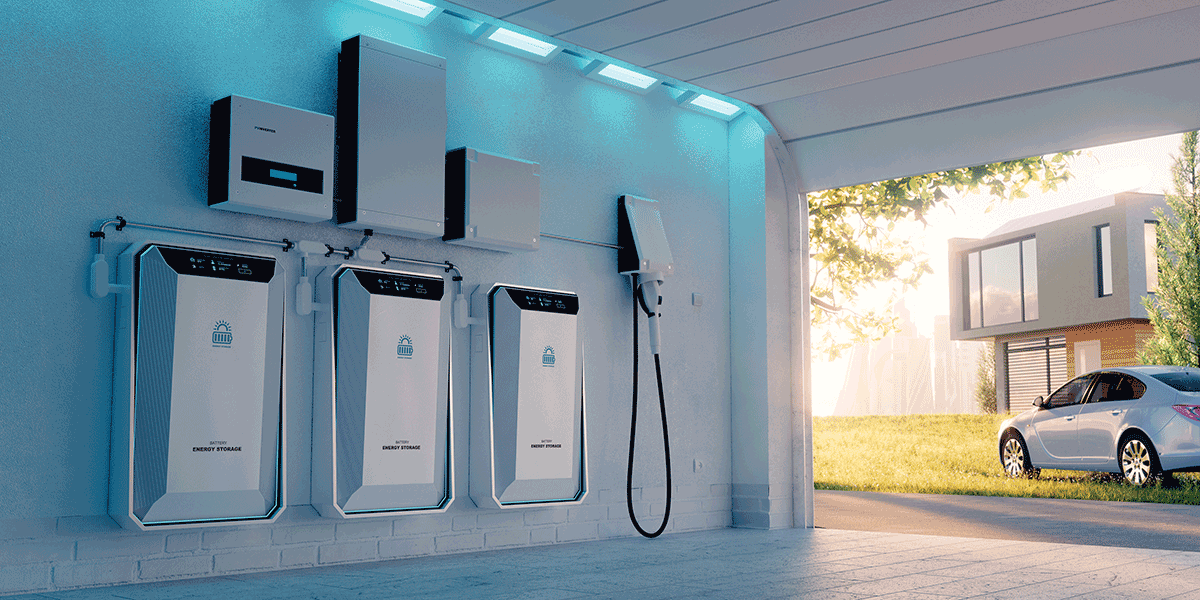
Are residential energy storage systems (ESSs) that meet the performance unit level criteria of UL 9540A as documented in a UL 9540A test report and not marked “for use in habitable spaces” exempt from compliance with the requirements found in Section 330 Energy Storage Systems of the 2024 International Residential Code (IRC)?
Answer
No. ESSs that lack the marking “for use in habitable spaces” must comply with IRC Section 330. For a residential ESS to be exempt, Exception 1 to Section 330.1 requires that the ESS be Certified (Listed) and labeled for use in habitable spaces. To comply with the Certification (Listing ) requirements for use in habitable spaces, an ESS must pass the Cell Level Test in UL 9540A, Test Method for Evaluating Thermal Runaway Fire Propagation in Battery Energy Storage Systems. The criteria are (1) a battery cell cannot be forced into thermal runaway through any of the permitted propagation methods and (2) any ventilated off gassing from the cell must be non-flammable. Presently available battery chemistries, such as lithium ion (Li-ion), nickel manganese cobalt oxide (NMC) or lithium iron phosphate (LFP) are unable to comply with the cell-level testing in UL 9540A. Today’s cell chemistries that have met the performance criteria of the UL 9540A Unit Level Test must be installed in accordance with all the applicable requirements in Section 330 of the 2024 IRC. This section limits ESS installations to specific location types with defined noncombustible room constructions. The IRC Section 330 requirements also mirror the requirements of Chapter 15, One- and Two-Family Dwellings and Townhouse Units in NFPA 855, the Standard for the Installation of Stationary Energy Storage Systems, 2023 edition.
The complete UL 9540A test report – including cell, module and unit level test data – should be reviewed by the authority having jurisdiction (AHJ) for installation compliance. The report will indicate the minimum required separations between an ESS and combustible materials as well as between multiple stacked Certified (Listed) ESS units according to installation instructions. For indoor residential installations, the report will also detail the concentration of flammable gas does not exceed 25% lower flammable limit (LFL) for the smallest intended room installation size.
UL Solutions Certifies (Lists) energy storage systems under the product category Energy Storage Systems and Equipment (FTBW). A list of batteries with completed UL 9540A testing can be found under the product category Evaluation of Thermal Runaway Fire Propagation in Batteries and Energy Storage Systems (AACD). The guide information and Certification (Listing) information for FTBW and AACD may be viewed on Product iQ® at www.ul.com/piq; enter FTBW or AACD at the search field.
Question
The 2026 National Electrical Code® (NEC®) in Sections 625.44 (A) and (B) requires receptacles used to connect to cord-and-plug-connected electrical vehicle supply equipment (EVSE) or wireless power transfer equipment (WPTE) to be listed for EVSE and WPTE use. Does UL Solutions have Certification (Listing ) requirements for these types of receptacles, and how would I identify a receptacle that is Certified (Listed) for EVSE and WPTE use?
Answer
On Nov. 3, 2025, UL Standards & Engagement published a Certification Requirement Decision (CRD) for UL 498, the Standard for Attachment Plugs and Receptacles, to establish Certification (Listing) requirements for electrical vehicle supply equipment – EV identified receptacles. The CRD identifies additional construction, testing, marking and installation instruction requirements for electric vehicle (EV) receptacles.
Flush and surface-mounted receptacles Certified (Listed) for EVSE and WPTE use in accordance with NEC Section 625.44(A) and (B) will be identified with the term EV Receptacle or EV Recpt. on the device visible after installation with the wall plate removed. The letters “EV” in green will be on the face of the device.
In addition, device installation instructions will indicate that it be installed on a branch circuit protected by a circuit breaker or fuse of the same rating as the receptacle or equivalent text.
UL Solutions Certifies (Lists) EV receptacles under the product category Receptacles for Plugs and Attachment Plugs (RTRT). The guide information and certifications under RTRT can be viewed on Product iQ® at www.UL.com/piq; enter RTRT at the search field.