

Electric vehicle (EV) adoption continues to accelerate across the United States, driving unprecedented expansion of charging infrastructure in homes, workplaces, transit depots, and along major highway corridors. As installations grow in number and complexity—from Level 1 residential charging to high-powered DC fast charging for fleets—electrical professionals must understand the terminology, equipment classifications, planning considerations, and code implications that shape safe and reliable deployment. The following overview, adapted from U.S. Department of Energy resources, provides a comprehensive look at today’s EV charging landscape.
OVERVIEW
Tens of thousands of electric vehicle (EV) charging stations are available in the United States. These charging stations are being installed in key areas throughout the country for public charging and workplace charging as a supplement to residential charging. Most EV owners do the majority of their charging at home.
CHARGING INFRASTRUCTURE DEVELOPMENT
Consumers and fleets considering electric vehicles (EVs)—which include all-electric vehicles and plug-in hybrid electric vehicles (PHEVs)—need access to charging stations. For most drivers, this starts with charging at home or at fleet facilities. Charging stations at workplaces and public destinations may help bolster market acceptance by offering more flexible charging opportunities at commonly visited locations. Community leaders can find out more through EV readiness planning. The EVI-X Toolbox offers resources to estimate the charging infrastructure necessary to support typical daily travel in a given state or city, charging infrastructure needs to support long-distance travel (100 miles or more) along highway corridors in a given state or county, and to determine how EV charging will impact electricity demand.
Charging the growing number of EVs in use requires a robust network of stations for both consumers and fleets. The Alternative Fueling Station Locator allows users to search for public and private charging stations. Quarterly reports on EV charging station trends show the growth of public and private charging and assess the current state of charging infrastructure in the United States.
CHARGING STATIONS
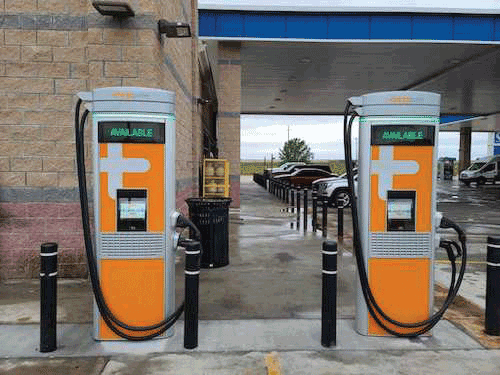
Public charging stations make EVs more convenient. Although the majority of EV owners charge at home, public charging and workplace charging stations can increase the daily useful range of all-electric vehicles and reduce the amount of gasoline consumed by PHEVs.
General public charging uses Level 2 or DC fast charging. Level 1 and 2 charging stations should typically be located where vehicle owners are highly concentrated and parked for long periods of time, such as shopping centers, airports, hotels, government offices, and other businesses. Public charging should also be located along highway corridors or at urban charging hubs.
CHARGING INFRASTRUCTURE TERMINOLOGY
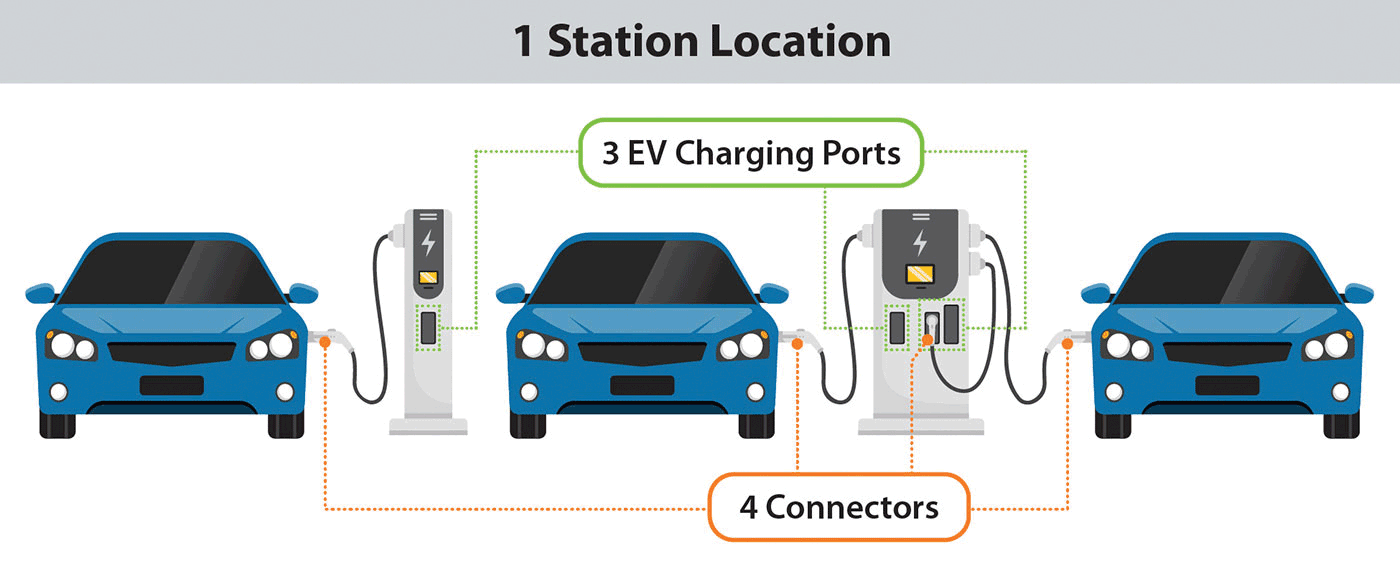
The charging infrastructure industry has aligned with a common standard called the Open Charge Point Interface (OCPI) protocol, which uses specific terminology to describe charging infrastructure: station location, EV charging port, and connector. The Alternative Fuels Data Center and the Station Locator use the following charging infrastructure definitions:
- Station Location:A station location represents a physical place with one or more EV charging ports. Examples include a parking garage or a parking lot. In some cases like a large mall parking lot, there may be multiple station locations even if they have the same address.
- EV Charging Port (also called a charger):An EV charging port provides power to charge only one vehicle at a time even though it may have multiple connectors. The unit that houses EV charging ports is sometimes called a charging post, which can have one or more EV charging ports. EV charging ports are also sometimes referred to as electric vehicle supply equipment (EVSE) ports.
- Connector:A connector is what is plugged into a vehicle to charge it. Multiple connectors and connector types (such as CHAdeMO and CCS) can be available on one EV charging port, but only one vehicle will charge at a time. Connectors are sometimes called plugs.
CHARGING EQUIPMENT
Charging equipment for EVs is classified by the rate at which the batteries are charged. Charging times vary based on how depleted the battery is (i.e., state-of-charge), how much energy it holds (i.e., capacity), the type of battery, the vehicle’s internal charger capacity, and the type of charging equipment (e.g., charging level, charger power output, and electrical service specifications). The charging time can range from less than 20 minutes using DC fast chargers to 20 hours or more using Level 1 chargers, depending on these and other factors. When choosing equipment for a specific application, many factors, such as networking, payment capabilities, and operation and maintenance, should be considered.
AC Level 1 Charging
Approximately 5 miles of range per 1 hour of charging*
Alternating Current (AC) Level 1 equipment (often referred to simply as Level 1) provides charging through a 120 volt (V) AC plug. Most EVs will come with a portable Level 1 cordset, so no additional charging equipment is required. On one end of the cord is a standard NEMA connector (for example, a NEMA 5-15, which is a common three-prong household plug), and on the other end is an SAE J1772 standard connector (often referred to simply as J1772, shown in the above image). The J1772 connector plugs into the car’s J1772 charge port, and the NEMA connector plugs into a standard NEMA wall outlet.
Level 1 charging is typically used when there is only a 120 V outlet available, such as while charging at home, but it can easily provide charging for most drivers’ needs. For example, 8 hours of charging at 120 V can replenish about 40 miles of electric range for a mid-size EV. As of 2023, less than 1% of public EV charging ports in the United States were Level 1.
* Assumes 1.9 kW charging power
AC LEVEL 2 CHARGING
Approximately 25 miles of range per 1 hour of charging†
AC Level 2 equipment (often referred to simply as Level 2) offers charging through 240 V (typical in residential applications) or 208 V (typical in commercial applications) electrical service. Most homes have 240 V service available, and because Level 2 equipment can charge a typical EV battery overnight, EV owners commonly install it for home charging. Level 2 equipment is also commonly used for public and workplace charging and can operate at 40 to 80 amperes (Amp). Most residential Level 2 chargers operate at up to 30 Amps, delivering 7.2 kW of power. These units require a dedicated 40-Amp circuit to comply with the National Electric Code requirements in Article 625. As of 2023, nearly 80% of public EV charging ports in the United States were Level 2.
Level 2 charging equipment uses the same J1772 connector that Level 1 equipment uses. All commercially available EVs in the United States have the ability to charge using Level 1 and Level 2 charging equipment.
Vehicles with a J3400 connector (currently only Tesla vehicles) can use the connector for all charging levels, including Tesla’s Level 2 Destination Chargers and chargers for home. All Tesla vehicles come with a J1772 adapter, which allows them to use non-Tesla Level 2 charging equipment.
† A Level 2 unit can range from 2.9 to 19.2 kW power output.
DC FAST CHARGING
Approximately 100 to 200+ miles of range per 30 minutes of charging‡
Direct-current (DC) fast charging equipment (typically a three-phase AC input) enables rapid charging along heavy traffic corridors at installed stations at power outputs up to 500 kW. This is also referred to as Level 3 charging. As of 2023, more than 20% of public EV charging ports in the United States were DC fast chargers. The availability of DC fast charging is expected to increase as a result of federal funding to build a national EV charging network, such as the National Electric Vehicle Infrastructure Formula Program, the national Alternative Fuel Corridors grant program, and the Charging and Fueling Infrastructure Grants. Additionally, DC fast charging is projected to increase due to fleets adopting medium- and heavy-duty EVs (e.g., commercial trucks and vans and transit), as well as the installation of fast charging hubs for transportation network companies (e.g., Uber and Lyft) and other applications.
There are three types of DC fast charging systems, depending on the type of charge port on the vehicle: SAE Combined Charging System (CCS), CHAdeMO, and J3400.
The CCS connector (also known as SAE J1772 combo) lets drivers use the same charge port with AC Level 1, Level 2, and DC fast charging equipment. The only difference is that the DC fast charging connector has two additional bottom pins. Most EV models on the market can charge using the CCS connector.
The CHAdeMO connector is another common DC fast connector type among Japanese automakers.
SAE International is standardizing the J3400 connector based on Tesla’s design for the NACS connector, which works for all charging levels, including Tesla’s fast charging option, called a Supercharger. Although Tesla vehicles do not have a CCS or CHAdeMO charge port, they come with a limited CCS or CHAdeMO adapter that supports charging up to 19.2 kW. Tesla does sell full power adapters for both connector types. Several vehicle manufacturers have announced adopting the J3400 connector as early as 2025, which will allow non-Tesla EVs to charge at Tesla stations with the J3400 connector.
‡ A DC charging unit can provide up to 500 kW. Charging power varies by vehicle and battery state of charge.
Charging Infrastructure Procurement and Installation
Increasing available public and private charging equipment requires infrastructure procurement. Learn about how to successfully plan for, procure, and install charging infrastructure.
Charging Infrastructure Operation and Maintenance
Once charging infrastructure has been procured and installed, it must be properly operated and maintained. Learn about charging infrastructure operation and maintenance considerations.
Additional Charging Options
Another standard (SAE J3068) was developed in 2018 for higher rates of AC charging using three-phase power, which is common at commercial and industrial locations in the United States. Some components of the standard were adapted from the European three-phase charging standards and specified for North American AC grid voltages and requirements. In the United States, the common three-phase voltages are typically 208/120 V, 480/277 V. The standard targets power levels between 6 kW and 130 kW.
The Megawatt Charging System (MCS) is under development for DC charging up to 3.75 MW for short-dwell as well as lower power (<500 kW) long-dwell overnight charging for medium- and heavy-duty vehicle applications. A 2022 report looks at the requirements for charging stations that could support in-route charging for heavy-duty EVs. While 500 kW chargers are currently available from several charging manufacturers, the U.S. Department of Energy’s Vehicle Technologies Office is pursuing research that will bridge the technology gaps associated with implementing these networks in the United States. A 2017 report highlights technology gaps at the battery, vehicle, and infrastructure levels. In particular, many EVs on the roads today are not capable of charging at rates higher than 200 kW. However, vehicle technology is advancing, and most new EV models will be able to charge at higher rates, enabling the use of faster charging. You can find additional resources on EV charging and advanced charging system research efforts from the National Laboratory of the Rockies. For answers to frequently asked questions about the MCS and SAE J3271, see the fact sheet on Charging for Heavy-Duty Electric Trucks from Argonne National Laboratory.
Inductive Charging
Inductive charging equipment, which uses an electromagnetic field to transfer electricity to an EV without a cord, has been introduced commercially for installation as an aftermarket add-on. Some currently available wireless charging stations operate at power levels comparable to Level 2, though this technology is more common for transit or other fleet operations at higher power levels comparable to DC fast. The U.S. Department of Energy is conducting research to investigate the feasibility of high-powered wireless charging.
PROCUREMENT AND INSTALLATION FOR ELECTRIC VEHICLE CHARGING INFRASTRUCTURE
A variety of options for electric vehicle (EV) charging infrastructure exist, thereby creating a multifaceted infrastructure procurement process. The site host’s specific characteristics and goals, such as utilization and demographics, can also influence the process. Installing charging infrastructure can involve complex payment structures, data collection, ownership models, parking, and signage requirements, in addition to typical infrastructure considerations like cost, regulations, safety, efficiency, siting, and type of equipment. Some organizations may also need to issue a formal solicitation, such as a request for proposal (RFP). See the Infrastructure Development Checklist for important factors to consider when selecting and procuring charging infrastructure. Additionally, for guidance navigating rural infrastructure development, review the U.S. Department of Transportation’s Rural EV Toolkit. For additional public charging guidance, see the Public EV Charging Station Site Selection Checklist from the Joint Office of Energy and Transportation.
Identify the Need
The first step when planning to procure and install charging infrastructure is to consider your community members. It is important to understand their expected charging needs based on travel patterns, EV ownership, amount of time it may take to charge the vehicle battery, and the number and type of EVs expected to be served at each location. This type of information can help better determine the number and type of charging infrastructure required for the project. The California Energy Commission’s Electric Vehicle Charger Selection Guide offers an overview of the considerations for making a charger purchase.
The EVI-X Toolbox offers resources to estimate the charging infrastructure necessary to support typical daily travel in a given state or city, charging infrastructure needs to support long-distance travel (100 miles or more) along highway corridors in a given state or county, and to determine how EV charging will impact electricity demand.
Charging Access
Ensuring access to EV charging for all types of communities is an important consideration when planning infrastructure development. Low-income and under-resourced communities are typically exposed to a higher proportion of environmental hazards, and EV charging infrastructure can make it easier to encourage EV adoption as a strategy to reduce those impacts moving forward.
It is important to design charging infrastructure projects alongside a diverse set of community members. This provides local context that ensures appropriate charging solutions for the area. For example, a high-density urban area with multifamily housing might benefit from Level 2 curbside charging, while a more rural community may not have on-street parking and would benefit instead from centralized fast charging.
Cost Considerations
Another important consideration is to determine the cost associated with the required charging needs. This includes equipment, installation, and operation and maintenance (including electricity, demand charges, and any annual charging network fees).
Equipment
Equipment costs will vary based on factors such as application, location, charging level, and type. When choosing charging infrastructure, additional features to consider that can impact costs include: networking capabilities, output power rating (in kilowatts), number and type of connectors, number of vehicles that can simultaneously charge, and theft deterrence. The features chosen should align with anticipated needs and budget. Residential Level 1 charger costs can vary from $0 (if no additional equipment is needed) to $900. Meanwhile, a residential Level 2 charger can range from $380 to $690, according to a Rocky Mountain Institute Report. The National Laboratory of the Rockies (NLR) and Idaho National Laboratory (INL) Levelized Cost of Charging EVs in the United States report found that public charger costs are approximately $3,500 per connector for Level 2 and $38,000 to $90,000 per connector for DC fast, with higher costs depending on power output.
Installation
Installation costs can vary significantly based on factors including the number and type of charging infrastructure, geographic location, site location and required trenching, existing wiring and required electrical upgrades to accommodate existing and future charging needs, labor costs, and permitting. Data show that labor is the largest expense in a typical installation, and the per-charger cost goes down significantly for larger installations. According to the NLR and INL Levelized Cost of Charging EVs in the United States report, the charger installation costs for residential use vary from $400 to $600 per connector for Level 1 equipment and approximately $1,300 per connector for Level 2 equipment, not including labor and permitting costs. Public and workplace installation costs per charger average around $2,500 per connector for Level 2, with costs varying depending on location and number of chargers installed at each site. Similarly, DC fast installation costs can range anywhere from $20,000 per connector to $60,000 per connector depending on charger power and number of installed chargers per site.
Federal, state, local, and utility incentives may be available to offset installation costs. For more information on charging infrastructure cost considerations, see reports on the Costs Associated with Non-Residential Electric Vehicle Supply Equipment, Reducing EV Charging Infrastructure Costs, and Breakdown of Electric Vehicle Supply Equipment Installation Costs.
Networking
Networked charging infrastructure is connected to the internet and can send data, such as information on frequency of use, to a network services provider (i.e., charging network) and the site host. Networked charging infrastructure allows site hosts to offer radio-frequency identification (RFID), smart phone, or credit card payment; monitor and analyze use; and provide customer support. By selecting charging infrastructure with hardware that uses the Open Charge Point Protocol (OCPP) version 1.6 or higher, which physically separates the appliance aspects of the charging infrastructure from the network backend component, the site host can easily switch charging networks without expensive equipment upgrades. This prevents stranded assets by allowing any network to operate the equipment in the event that a site host decides to switch charging networks, or the existing provider no longer offers charging. OCPP is the industry standard for open access. For more information on open access, see the Open Charge Alliance.
Non-networked charging infrastructure is not connected to the internet and provides basic charging capabilities without advanced utilization monitoring or payment capabilities. To install a networked station, the site must have access to a wired or wireless internet connection or cellular service.
Other Considerations
The process of procuring charging infrastructure includes many other considerations, such as compliance, permitting, safety, ownership, signage, markings, and more.
Compliance, Permitting, and Inspection
When choosing charging infrastructure, ensure that the manufacturer has complied with certification requirements, including testing the product with a certified testing body. Charging infrastructure should also be compliant with SAE International standards, such as SAE J1772.
Consider domestically manufactured EV charging infrastructure compliant with Buy America requirements. Some EV charging incentive programs may require Buy America compliant equipment. Visit the Made in America Office website for more information.
Also, check for other optional certifications that may be of interest, such as the U.S. Environmental Protection Agency’s ENERGY STAR® program. To qualify for ENERGY STAR certification, chargers must be rigorously tested for operational safety by a nationally recognized testing laboratory. Certified Level 1 and Level 2 chargers use 40% less energy than other similar products when in standby mode (up to 85% of the time). In 2021, ENERGY STAR set energy efficiency criteria for DC fast chargers up to 350 kW. A certified 50 kW DC fast charger would save about 1.5 MWh/year, equivalent to about $1,650 over the product’s lifetime. Also, ENERGY STAR certified chargers that are listed as “Connected Capable” on the ENERGY STAR EVSE Product Finder or the DC EVSE Product Finder use open communication standards and have other networking capabilities, such as remote management of the charger and the ability to support demand response requests.
Charging station installations must comply with local and state codes and regulations and be completed by a licensed electrical contractor. To find licensed electrical contractors trained in charging station installation, refer to the Electric Vehicle Infrastructure Training Program (EVITP) list of contractors trained and certified in equipment installation and consult with project partners, including charging station manufacturers, utilities, and Clean Cities and Communities coalitions.
An electrical contractor should be aware of the relevant codes and standards and obtain a permit from the local building authorities before installing charging infrastructure. Additional time may be needed, as the permitting process could require a site installation plan, and approval from fire, environmental, or electrical inspection entities. For comprehensive guidance on all aspects of charger installation, including planning, permitting, construction, and accessibility considerations, see the 2019 Electric Vehicle Charging Station Permitting Guidebook from the California Governor’s Office of Business and Economic Development(PDF). Visit the EV Permitting page for more information on what state and local governments can do to streamline the permitting process for EV charging station installation.
Ownership
Charging station ownership typically falls into one of two categories: site-host-owned or third-party-owned (e.g., owned by a charging network), though there are other possible arrangements. Charging infrastructure owned by the site host is purchased, installed, and maintained by the site host, which allows for full control over the station and the ability to keep all revenue from the station (if applicable). In this scenario, site hosts are responsible for all associated costs, including any maintenance or payment transaction fees. Charging infrastructure owned by a third party is installed and maintained by the third party, which minimizes responsibility to the site host. In some cases, the site host may also earn revenue by leasing the space occupied by the charging infrastructure to the third party. Other ownership arrangements may exist between the electric utility and the site host or third-party operator. For more information on the primary ownership models, see the Decide on Ownership Model section of the U.S. Department of Transportation’s EV Infrastructure Project Planning Checklist. Additionally, for details on public EV charger installation ownership structures, see Atlas Public Policy’s Public EV Charging Business Models for Retail Site Hosts.
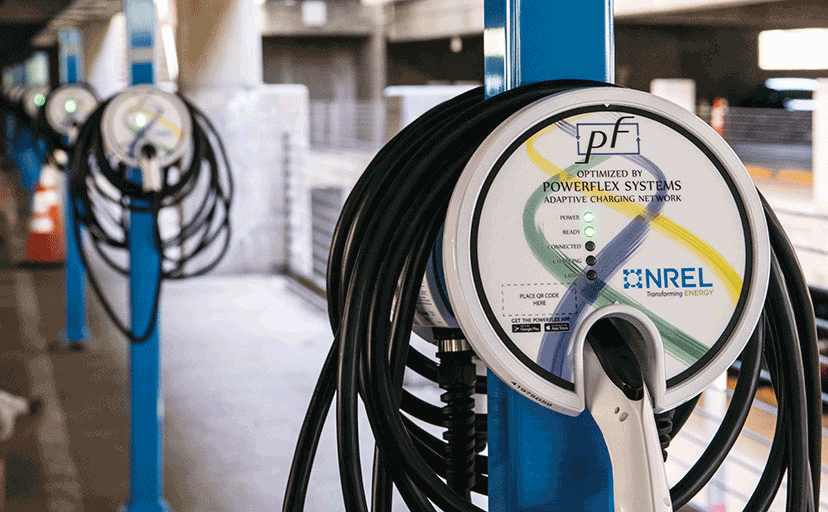
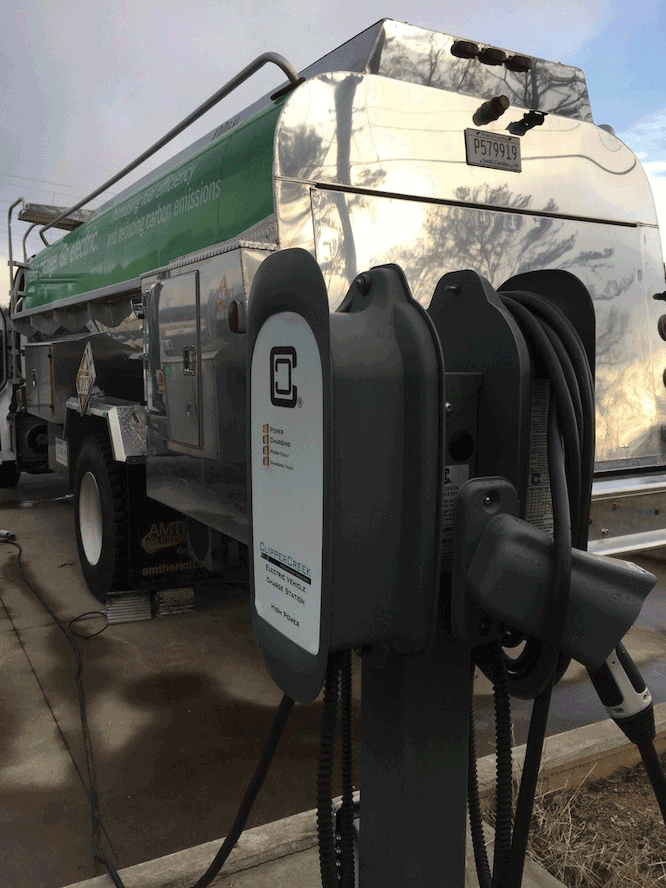
Photos 2 and 3.
Signage, Markings, and Accessibility Considerations
When installing EV charging infrastructure, consider the signage and pavement markings that may be necessary to help inform drivers. State and local governments may have requirements concerning EV charging infrastructure signage and marking requirements (e.g., Maryland’s EV parking space signage requirement). Other considerations for installing EV charging infrastructure include proximity to amenities, lighting, and safety, including vandalism prevention strategies (e.g., motion detectors, anti-vandalism hardware). While not federally required, Americans with Disabilities Act (ADA) requirements should also be taken under advisement. However, some EV charging incentive programs (e.g., the National Electric Vehicle Infrastructure Formula Program) state legislation (e.g., in California and Hawaii), or local governments may require that new EV charging installations are ADA-compliant (accessible, easy to use, and safe). Key considerations include ensuring adequate space for exiting and entering the vehicle, unobstructed access to the charger, free movement around the charger and connection point on the vehicle, and clear paths and proximity to building entrances. For more information on accessibility considerations, see Access Board’s Design Recommendations for Accessible Electric Vehicle Charging Stations report. Finally, infrastructure developers should consider engaging with their local Clean Cities and Communities coalition for assistance identifying any local requirements.
Utilities and Other Partners
According to sales data from Argonne National Laboratory, EV purchases continue to increase. Due to the increasing number of EVs on the road, utilities play an important role in supporting the projected future growth of charging infrastructure and managing energy efficiency optimization for charging stations and the electrical grid. It is important to engage with utilities early in the infrastructure planning process. Utilities can provide in-depth analysis of power availability and capacity for infrastructure planning and mitigate grid impacts by offering managed charging (also called smart charging). This allows a utility to remotely control EV charging by increasing, decreasing, or turning off charging to help meet the needs of the grid. In addition, utilities can offer incentives or unique ownership models for charging equipment and installation. Use the U-Finder tool to identify your utility partners, get their contact information, and learn about their EV charger installation efforts.
During the planning and procurement process, site hosts may also choose to engage their local Clean Cities and Communities coalition and state and local governments for advice.
For more information on charging infrastructure and electric utilities, see the Edison Electric Institute’s Electric Transportation website, the Smart Electric Power Alliance’s Transportation Electrification website, and Atlas Public Policy’s EV Hub.
Formal Solicitations
Depending on the site host organization’s procurement requirements, a formal solicitation process may be needed to purchase and install charging infrastructure. Each of the considerations above, as well as operation and maintenance issues, can be included in the solicitation. For information on charging infrastructure requests for proposal (RFPs), see the U.S. Department of Energy’s Guidance in Procurement of Electric Vehicle Supply Equipment or Forth Mobility’s EV Charging and Public/Private Partnerships RFP Template. Additionally, state agencies can register for the EV States Clearinghouse to view example RFPs.
FLEET CHARGING
Fleets that choose to incorporate EVs into their operations must consider several factors when planning for charging stations. Peak demand, duty cycles, garaging locations, vehicle models, and availability of off-site public charging stations can all factor into decisions about the number, location, and type(s) of charging units. City planners, fleet managers, and utilities can work together with installers to determine the best charging solutions.
Fleets around the country are adopting EVs for light-, medium-, and heavy-duty vehicle applications. Transit agencies, municipalities, and commercial fleets are also exploring their options with EVs. To prepare for and support this choice, several utilities have published fleet electrification guidance, such as Pacific Gas and Electric’s Take Charge: A Guidebook to Fleet Electrification and Infrastructure.
EVs in Fleet Applications
Many light-duty vehicles are available for fleet applications. Although some new models are limited to certain states, many are or will soon be available nationwide. MD/HD vehicles are also available for many fleet applications. In addition to federal and state incentives for light-duty EVs, some medium-duty EVs also qualify for such incentives. Many off-road EVs are also available, including forklifts, mowers, agricultural tractors, and airport ground support equipment. Vehicle upfits are available for MD/HD vehicles as well, and this can greatly increase the number of options available to a fleet.
Safety and Maintenance
From the original equipment manufacturer (OEM), EVs are very safe and undergo rigorous safety testing to meet federal requirements. Their electrical systems require little maintenance, but battery life and warranties should be well understood upfront.
Training
Fleets should consider training for EV drivers and vehicle technicians. Technicians will need to be trained in repairing and maintaining the vehicles, and drivers will need to be trained in the use and charging of the vehicle.
MD/HD Vehicle Considerations
- Many fleets use larger vehicles to meet their needs, and these vehicles bring with them even more factors to consider.
- Vehicle considerations:
- Several MD/HD EV models are available for applications such as school and transit buses, delivery service vehicles, and refuse trucks. These applications tend to have a return-to-base duty cycle (for central fueling) and shorter, predictable routes that are well-suited to current EV capabilities. However, vehicles are also available or in development to meet other fleet needs.
- Initial vehicle production quantities can be limited, resulting in longer delivery times for some MD/HD EVs, so early planning is advisable.
- MD/HD vehicles can be more impacted by factors that can reduce range, such as heating/cooling loads, high driving speeds, significant cargo loads, and auxiliary power use in power takeoff, auxiliary power units, etc.
Charging considerations:
- Level 2 equipment can meet the needs of MD/HD EVs with moderate daily utilization or long dwell periods (school buses charging overnight, for example).
- DCFC can add 100 to 200+ miles of range in 30 minutes, giving it the ability to charge multiple vehicles per day.
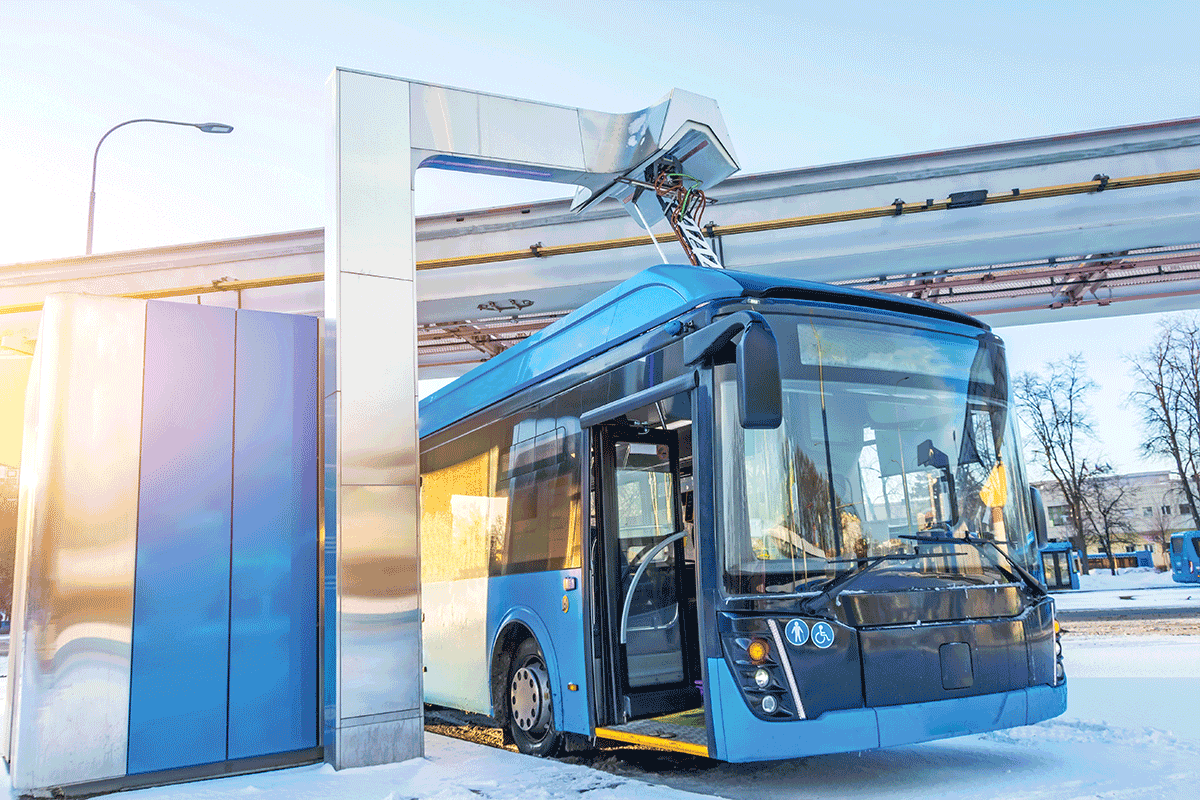
- MD/HD vehicle charging equipment may have different applications than those of LD vehicle equipment. For example, some transit buses can be ordered with overhead conductive charging equipment, and some manufacturers are testing inductive wireless charging equipment. An advantage to these systems is that charging begins automatically once the vehicle is parked in the correct position.
Selecting Fleet EVs
The first step for a fleet is to assess candidate vehicles’ driving and duty requirements, then apply relevant policies/incentives, and address cost considerations.
Driving/Duty Requirements
- A fleet should first determine the vehicle’s specific operating needs to be met, as these have an impact on the vehicle’s range. Factors to consider:
- Daily driving requirements (routes/miles, stop-and-go vs. highway driving, etc.)
- Environmental factors like weather (e.g., extreme cold) and terrain (such as mountain driving)
- Heating/cooling loads, their draw on the battery, and optional auxiliary power or heating/cooling units powered by diesel or another fuel
- For MD/HD vehicles, auxiliary loads for equipment such as cranes, lifts, off-board tools, etc.
- Additional factors to consider:
- The vehicle’s route, opportunities for charging, dwell times, and the availability of/potential demand for public charging stations (and the associated cost for charging there). The Joint Office of Energy and Transportation’s Electric School Bus Route Analysis Tool can assist school bus fleets in determining the bus power usage and charger power needs for their unique bus routes.
- OEM vehicle maintenance and support
- Whether the fleet’s needs would be better met by an all-electric vehicle (also called a battery electric vehicle, BEV) or a PHEV. For vehicles driving 100 to 300 miles per day and able to plug in at night, a BEV might be suitable. If charging is available during the vehicle’s idle periods, a BEV could exceed this 100 to 300-mile daily range. Otherwise, a PHEV (with a much shorter all-electric range but able to use another fuel for extended driving) might be better for extended driving.
- Efficiency and range: Compare light-duty EVs and conventional vehicles at FuelEconomy.gov.
Applicable Policies
Some fleets must meet requirements under EPAct or comply with state or local alternative transportation policies. It’s important to understand the fleet’s requirements and how fleets can meet them by deploying EVs.
Cost Considerations
The project budget should include available funding in the short and long term to account for capital and ongoing costs, as well as available incentives for vehicles and charging infrastructure. In addition to federal and state incentives, a fleet may be eligible for incentives from the local municipality or utility provider. Your local Clean Cities and Communities coalition director can be a great resource here. Use the Vehicle Cost Calculator to estimate the total cost of ownership based on vehicle use.
Vehicle Selection
The next step is to identify available vehicles that could meet the fleet’s needs. The Vehicle Search tool contains many LD and MD/HD vehicles currently available for a wide range of fleet applications. Electrified repowers are also available for MD/HD vehicles, which can add even more options. These can be new vehicles where the OEM uses an authorized company to electrify the powertrain while maintaining the factory OEM warranty.
Once a vehicle(s) is identified, the fleet should work with the vehicle provider(s) to verify:
- Vehicle availability and cost. Public fleets will need to determine if a candidate vehicle is available through their specific procurement system (such as the General Services Administration), and private fleets may prefer to work with a familiar OEM or dealer. Also, to be eligible for certain (e.g., state) incentives, a fleet may need to choose from a list of vehicles approved under that specific program.
- The vehicle’s applicability to fleet needs
- The vehicle’s charging needs and charging equipment options for the number of vehicles needed
- Warranties, especially pertaining to batteries and their replacement
- Vehicle maintenance and support and the availability of local servicing. This should include a service agreement that outlines who will perform maintenance both during and after the warranty period and how (and by whom) your service technicians will be trained.
- Driver training if offered by the provider
- Delivery timeline.
STATE PLANNING AND FUNDING FOR ELECTRIC VEHICLE CHARGING INFRASTRUCTURE
State governments play an important role in the planning and implementation of electric vehicles (EV) and EV charging infrastructure. Specifically, the Infrastructure Investment and Jobs Act (IIJA) (Public Law 117-58), provides funding to build out a national EV charging network. In addition, IIJA will deliver electric school and transit buses across the country. These vehicles and charging infrastructure will drive demand for American-made batteries, vehicles, and infrastructure, creating jobs and supporting domestic manufacturing. States play a key role in implementing IIJA efforts by developing plans, offering incentive programs, and identifying and distributing funding.
Establishing Charging Needs and Options
Selecting vehicles should be the preliminary step in gauging the amount of charging equipment needed at a fleet facility. Factors to keep in mind:
- The vehicle provider will typically offer several charging options and even specific equipment/provider recommendations. Ensure compatibility of the charging infrastructure with your vehicles with the OEM and charging provider before purchasing equipment.
- Level 2 equipment typically requires one unit per vehicle (to enable overnight charging of all vehicles), whereas DCFC can serve multiple vehicles.
- Although Level 2 equipment is less expensive to purchase, DCFC may reduce overall land use and installation labor costs as fewer units will be needed.
- All-electric vehicles that drive more than 100 miles in a day may require DCFC for in-shift recharging.
- A fleet may want to make charging equipment available to employees as well, either to share while fleet vehicles are away from the depot or dedicated for employee use as part of the overall project plan.
To maximize flexibility, a fleet may choose to forego installing hard-wired charging units and instead install 120/240 V outlets intended for use with portable charging units. A NEMA 14-50 outlet can be paired with an adapter to accommodate either a Level 1 (120 V) or Level 2 (240 V) portable charging unit. Portable units are much less expensive and can be easily replaced when necessary, although these sometimes lack network-connected managed charging solutions. Even if choosing this option, it’s important to also consider safety and signage needs (see Determining the Charging Site Location below).
When evaluating equipment vendors, consider networking options. A networked charging system is connected to the internet and sends data, such as information on frequency of use, to the network services provider (i.e., charging network) and/or fleet administrator. Networked systems provide customer support to the fleet and allow the fleet to monitor and analyze charger use. Selecting equipment that uses the Open Charge Point Protocol (OCPP) version 1.6 or higher, which physically separates the appliance aspects of the charging equipment from the network backend component, enables the fleet to easily switch charging networks without expensive equipment upgrades. This prevents stranded assets by allowing any network the ability to operate the equipment in the event that (1) the fleet decides to switch charging networks, or (2) the existing provider no longer offers charging or goes out of business. OCPP is the industry standard for open access. Networking considerations include:
- A networked station requires the site to have access to a wired or wireless internet connection or cellular service.
- Networking allows a fleet to track charging and electricity use separately from non-charging electricity use, making it easier to calculate vehicle O&M costs.
- Networking allows “smart” charging, or scheduling charging events (e.g., at night), to stagger vehicle charging and take advantage of lower off-peak electricity rates.
- Non-networked charging infrastructure is not connected to the internet and provides basic charging capabilities without advanced utilization monitoring or payment capabilities.
- The fleet will need to determine whether the charging equipment should be owned by the equipment/network provider or fleet. Equipment owned by the fleet is purchased, installed, and maintained by the fleet, which reduces overall cost and allows for full control over the equipment. In this scenario, the fleet is responsible for all associated costs, including any maintenance or repair. It’s important to understand the logistics (including who will be responsible for repairs), warranty coverage, and costs associated with owning and maintaining the equipment.
- Equipment owned by the network provider is installed and maintained by the provider, which minimizes responsibility to the fleet. Equipment purchase, installation, and maintenance costs are incorporated into the fees charged to the fleet users. In this scenario, it’s important to have a written agreement covering equipment maintenance and repair, including response time and equipment down time.
- Equipment down time can equate to vehicle down time, which can greatly impact fleet operations. Whichever scenario a fleet chooses, the implications of potential down time should be carefully considered. For example, a fleet may consider backup equipment (including portable charging units) or public charging options.
Other considerations include on-site storage (batteries) or generation (e.g., wind/solar) to shave peak power usage or provide backup power flexibility.
Working with the Utility
It’s important to work with the local utility early in the process to confirm charging requirements (in both the short and long term, considering future expansion), understand the resulting electrical demand (and any impacts on electricity pricing), and determine whether electrical upgrades may be needed at the charging site.
- The fleet should work with the utility (and vehicle and equipment providers) to analyze the fleet’s electricity and charging-time needs by plotting electricity-use and time requirements for all fleet EVs. This will help in assessing electrical upgrade needs and choosing the appropriate number and type of charging units.
- It’s very important to understand the impacts of greatly increased electricity consumption, especially when several vehicles need to be charged simultaneously at high charging rates. For example, high electricity consumption could incur “demand charges” (a fee applied to your greatest power draw during peak periods, on top of the rate that you pay for the energy itself). Understanding these issues will help to determine whether a networked solution is needed to help manage them.
- Special reduced-rate structures may be available for fleets charging EVs, although new meters may be required to take advantage of these rate structures.
- It may be advisable to select an electrical contractor with experience in similar construction projects and bring that expert into the conversation at this point. The equipment provider may have recommendations for a qualified electrical contractor with experience in charging equipment installations, and the Electric Vehicle Infrastructure Training Program (EVITP) maintains a list of contractors trained and certified in equipment installation.
Determining the Charging Site Location
Site selection should include the following factors:
- The number and type of charging units required in both the near and long term: If considering expansion of the EV fleet beyond the initial vehicle deployment, consider adding extra circuits, electrical capacity, and conduit from the electrical panel to support future charger installations. It’s less expensive to add this extra capacity up front vs. upgrading in the future.
- Metering: Consider installing separate meters for the EVs to track their electricity usage separately. This may help you get a special EV electricity rate from the utility.
- Equipment proximity to electrical infrastructure: The further this distance, the more complicated and expensive the installation will be.
- Equipment proximity to a wireless internet connection, if a networked station is planned.
- Convenience: Equipment and EV parking should be convenient to users, but keep in mind that EVs can be parked for hours at a time for charging.
- Avoiding hazards: Cords/wires should not interfere with pedestrian traffic or present a tripping hazard. Charging spaces should not be located near potentially hazardous areas, such as those with low visibility or high foot traffic.
- Pooled water and irrigation: Charging equipment is designed to operate safely in wet areas, but users will be more comfortable if it is not located where water pools or where irrigation systems spray. If building in a known flood plain, consult with an electrical contractor to ensure appropriate codes and building requirements are addressed including mounting height and storage for connectors. Ensure the EV charger is waterproof (Ingress Protection ratings, such as IP66).
- Weather and battery temperature limits: Because some EV batteries have operating- and charging-temperature limits, charging equipment may need to be located within an enclosed, climate-controlled area in extreme climates.
- Preventing impact: Curbs, wheel stops, and setbacks should be used to prevent EVs from colliding with charging equipment.
- Signage: Use signs that can be seen over parked vehicles to designate EV-only parking spaces.
- Accessibility: Evaluate and address requirements for complying with the Americans with Disabilities Act (ADA), as well as state, local, and company accessibility policies.
- Vandalism: Assess the risk of vandalism and minimize risk with preventive strategies.
Project Planning
The project plan should include the following:
- Convening the project team: Work with the utility, vehicle provider, and charging equipment vendor to get their input to the project plans, costs, and logistics. An important logistic to consider is timing the purchase and installation of charging equipment with the delivery of vehicles (which can be especially slow/complicated for municipal organizations). Consider the project needs from the perspective of each.
- Establishing a charging plan, including networking requirements, electricity rate implications, and equipment ownership responsibilities.
- Selecting a construction contractor to bring the construction perspective to the team.
- Charging station installations must comply with local and state codes and regulations and be completed by a licensed electrical contractor. Determine all applicable requirements and plan accordingly, and keep in mind that many jurisdictions have unique ordinances or regulations. The project contractor should know the relevant codes/standards and obtain approval from the local building, fire, environmental, and electrical inspecting/permitting authorities.
- Establishing project costs, logistics, and timelines: Consider the condition and location of existing electrical equipment, which will determine the complexity of the required electrical installation. For example, an isolation transformer may be required to step electricity down to Level 2 or up to DCFC voltage.
- Including permitting and inspections: These typically incur fees and can greatly impact the project timeline.
- Estimating costs: Include available incentives, project costs, and ongoing expenses/fees.
- Equipment costs may vary based on factors such as location, charging level, and type. Single connector unit costs range from $300 to $1,500 for Level 1, $400 to $6,500 for Level 2, and $10,000 to $40,000 for DCFC.
- Installation costs may vary based on factors including the number and type of equipment, geographic location, site location and required trenching, existing wiring and required electrical upgrades to accommodate existing and future needs, labor costs, and permitting. Based on these factors, installation costs can range from up to $3,000 for Level 1, $600 to $12,700 for Level 2, and $4,000 to $51,000 for DCFC. Some heavy-duty installations can run much more.
- Establishing a final site plan and budget: Note that a site installation plan may be required before charging equipment can be installed.
Implementation and Training
The final step is engineering and construction, including permitting and inspections. At this point, it may be advisable to develop charging guidelines (or an actual policy) for drivers and staff, particularly if charging equipment will be shared. It’s also advisable to develop a training plan for EV drivers, vehicle technicians, fleet operations staff (e.g., those responsible for the vehicle charging effort), and even first and second responders in the area who may be called to the fleet location in an emergency.
- Technicians will need to be trained in repairing and maintaining the vehicles, both during and after the warranty period.
- Operations staff will need to be trained on charging logistics, which can be more complicated when many EVs and charging stations are involved.
- Drivers will need to be trained in the use and charging of the vehicle, and this should include “refresher” training (especially when the drivers drive both EVs and non-electric vehicles).
- For first responders, vehicle OEMs publish emergency response guides for their vehicles (most of these guides are available on the National Fire Protection Association website) and some offer training for emergency responders. The National Fire Protection Association also has training and information resources available.
- The National Alternative Fuels Training Consortium (NAFTC) provides training for vehicle technicians and first responders.
The following table summarizes major IIJA programs that assist states in their electrification efforts. Visit the U.S. Department of Energy’s (DOE) IIJA Programs for a review of new DOE programs.
The Federal and State Laws and Incentives database is another resource for federal and state incentives and regulations related to alternative fuel vehicles and infrastructure. Further, DOE’s Battery Policies and Incentives Search tool provides summaries of battery programs under IIJA, and other federal and state legislation.
Joint Office
The Joint Office of Energy and Transportation (Joint Office) is an interagency collaboration between DOE and DOT that supports a nationwide effort to develop the infrastructure necessary for widespread EV adoption. The Joint Office supports state-level efforts to install, operate, and maintain EV infrastructure as part of a goal to facilitate a national network of up to 500,000 EV chargers. The Joint Office provides support and expertise to a multitude of IIJA programs that seek to strategically expand EV charging infrastructure, zero-emission fueling infrastructure, and zero-emission transit and school buses. Visit DriveElectric.gov for technical assistance, tools and data, and guidance resources from the Joint Office.
Building Codes, Parking Ordinances, and Zoning Ordinances
Building codes as well as parking and zoning ordinances are all regulatory tools at the disposal of state and local officials to further the EV readiness of communities. Each has a different potential role to play and can be used in tandem to encourage the adoption of vehicle charging infrastructure.
- Building Codes:Building codes ensure construction meets fire, electrical, plumbing, and other health and safety requirements. These codes are based on national or international standards, are adopted at the state or local level, and are enforced at the local level through permitting and inspection processes.
- Parking Ordinance:Parking ordinances are used to manage public enforcement of parking policies and apply to publicly accessible EV charging stations, including municipal lots, privately operated parking lots or garages, and on-street locations.
- Zoning Ordinance:Zoning ordinances regulate land use, including what can be built on a property. In the context of EV readiness, local governments can use zoning ordinances to control where EV charging stations are allowed or prohibited. Zoning can also be used to incentivize or require EV charging stations.
Building codes, parking ordinances, and zoning ordinances can influence electric vehicle (EV) infrastructure planning by creating design standards, requiring a minimum number of EV-ready spaces for new construction, or allowing EV charger installation as part of zoning ordinances. In addition to considering charging for light-duty EVs, codes and regulations should also be adopted to support infrastructure for neighborhood EVs and e-micromobility options, which typically only require access to a 120V receptacle to charge.
Building Codes
Building codes ensure construction meets fire, electrical, plumbing, and other health and safety requirements. These codes are based on national or international standards, are adopted at the state or local level, and are enforced at the local level through permitting and inspection processes. The International Code Council (ICC) develops model codes and standards, including the International Building Code (IBC), International Residential Code (IRC), and International Energy Conservation Code (IECC). While the IRC and IECC do not currently include references to EV charging, the 2021 version of the IBC has two references in Sections 406.2.7 and 1107. These sections include requirements for EV charging stations to be installed in accordance with NFPA 70 and to be UL listed, as well as a required number of accessible vehicle spaces (not less than 5% of EV charging station spaces but no fewer than one space shall be accessible).
As noted by the ICC in EV and Building Codes, “EV infrastructure requirements in building codes support fleets and consumers adopting EVs by increasing access to parking spaces with EV charging stations. Current EV charging provisions in some state and local building codes typically require new buildings and major renovations to include a mixture of parking spaces with installed EV charging infrastructure and some with the necessary electrical equipment to support the future installation of EV charging infrastructure as EV use continues to grow. A study by the Southwest Energy Efficiency Project showed that the installation of EV electrical equipment into new buildings can decrease installation costs of charging stations by up to 75% compared to installation during a building retrofit.”
Updating building codes can help a jurisdiction become EV friendly in several ways. For example, codes can be established that require all new construction and major renovations to incorporate EV charging infrastructure. Possible requirements include:
- Install EV chargers at a minimum number of parking spaces or ensure they can easily accommodate future charger installation
- Include a minimum number of accessible EV charging station spaces
- Require the EV charging equipment to be UL listed.
EV friendly building codes can also reduce the overall cost of EV charging infrastructure development if EV-ready spaces are incorporated into new construction. It costs 4-6 times more to add EV-ready elements post-construction compared to during construction or major renovation.
Updating and amending building codes is a familiar process for many local and state governments. To facilitate updates related to EV charging, the ICC provides model language that can be integrated into existing codes. This model language also supports consistent approaches for defining EV-ready spaces and formatting of requirements, making it easier for an applicant to find the required information when submitting a project for approvals.
Parking Ordinances
Parking ordinances are used to manage public enforcement of parking policies and apply to publicly accessible EV charging stations, including municipal lots, privately operated parking lots or garages, and on-street locations. Parking regulation and enforcement is typically a shared responsibility in municipalities and requires participation from departments of transportation, law enforcement, public works, permitting, parking lot and garage managers, and other key players in transportation and traffic management. Officials can leverage parking ordinances to address several aspects of EV charging infrastructure, including design aesthetics, maximum parking time per EV, access, and violations.
Updating parking ordinances can help a jurisdiction become EV friendly in the following ways:
- Provide clear design requirements for EV charging equipment and parking spaces.
- Define safety (e.g., bollards, wheel stops, cord storage) and security (e.g., lighting, element coverage, access to nearby amenities) requirements for the EV charging space.
- Require minimum number of EV charging spaces that are ADA compliant.
- Define approved signage for EV charging spaces and wayfinding.
- Permit law enforcement to enforce regulations (e.g., parking in an EV charging station space is permitted only for EVs, the time an EV can be parked in the space, or all EVs must be actively charging while parked).
Zoning Ordinances
Zoning ordinances regulate land use, including what can be built on a property. In the context of EV readiness, local governments can use zoning ordinances to control where EV charging stations are allowed or prohibited. Zoning can also be used to incentivize or require EV charging stations. Officials should understand how current zoning ordinances might prohibit or preclude the installation of EV charging stations and should review local ordinances to identify any language that could potentially impact installation.
Updating zoning ordinances can help a jurisdiction become EV friendly in the following ways:
- Allow EV charging stations at existing buildings and new buildings (whereas updating building codes only applies to new developments/redevelopments).
- Provide opportunities to streamline the project without requiring a zoning variance. For example, zoning codes may allow EV charging stations to be installed as an accessory use and permitted in all zones.
- Provide ability to address future issues with minimum off-street parking requirements. For example, zoning codes may clarify if an EV-only charging space counts toward minimum parking requirements. This can be further complicated if adding EV charging spaces reduces the total number of parking spaces because the station and electrical equipment require space.
Common code updates to create EV friendly regulations:
- Building Codes
- Set minimum requirements for EVSE-installed, EV-ready, and EV-capable spaces and/or accessible EV parking spaces
- Require EV charging station equipment to be certified, such as UL listed
- Include required information for construction permits, such as EV charging equipment details and location.
- Parking Ordinances
- Incorporate requirements for EV space design and location, including on-street parking
- Establish requirements for safety provisions such as bollards, wheel stops, and cord storage
- Restrict EV charging stations to EV parking only
- Include ADA compliance requirements for EV charging spaces, such as minimum required accessible spaces, as well as design and hardware requirements
- Create consistent signage information guidelines, such as rates, time of use, and wayfinding.
- Zoning Ordinances
- Adopt code that classifies EV charging stations as an accessory use for most cases and allowable in all zones
- Add a land use category to account for if/when EV charging stations are the primary use so they are not classified as a fueling station (e.g., a gas station)
- Identify permitted land uses for EV charging stations
- Set minimum requirements for the number of off-street EV charging spaces
- Count EV charging spaces toward minimum parking requirements
- Remove the requirement to conduct a parking review for applications solely for installation of EV charging stations as an accessory use
- Require publicly available charging ports to support all vehicle makes/models
- Create an expedited, streamlined permitting process for EV charging stations, including Level 2 and DC fast charging.
EV States Clearinghouse
To complement DriveElectric.gov, the EV States Clearinghouse at https://evstates.org/ is a one-stop shop for state agencies as they plan for and implement EV infrastructure programs under IIJA. This site is a repository for EV program documents from states, current state-level EV roadmaps, and other resources, and will provide guidance on how these resources may help with IIJA implementation. State agencies must register for a free account to access the Clearinghouse.
For a list of ENERGY STAR certified chargers, see the U.S. Environmental Protection Agency’s Product Finder list at https://www.energystar.gov/products/ev_chargers. A listing of charging infrastructure manufacturers with the ability to filter by product type/features is available on the Electric Drive Transportation Association’s GoElectricDrive website at https://www.goelectricdrive.org/charging-ev/charging-equipment-showroom.
SUMMARY
As electric vehicle adoption accelerates, charging infrastructure is evolving from a convenience to a critical component of the nation’s electrical system. From Level 1 residential charging to megawatt-scale fleet applications, successful deployment requires thoughtful planning, code compliance, utility coordination, and long-term maintenance strategies. By understanding equipment types, terminology, procurement pathways, and regulatory tools, communities and industry professionals can help ensure that EV charging infrastructure is safe, scalable, and built to support the next generation of transportation electrification.
Content adapted from resources provided by the U.S. Department of Energy, Alternative Fuels Data Center (afdc.energy.gov). The U.S. Department of Energy’s Alternative Fuels Data Center (AFDC) provides data, tools, and technical resources to support the adoption of alternative fuels and advanced vehicle technologies. Through research, analysis, and interagency collaboration, DOE works to advance transportation electrification and infrastructure deployment across the United States.